I still remember the first time I opened one of those weekly banned players lists from the PUBG Anti-Cheat Team. It was a cold evening, and I had just finished a solo match where something felt terribly off—shots came from impossible angles, and my killer seemed to know exactly where I was without any line of sight. Frustrated, I stumbled across an official announcement that permanently banned hundreds of accounts. Seeing those asterisk-hidden names felt like a small but meaningful victory. It’s now 2026, and that weekly ritual of transparency continues to remind me that behind every fair firefight is a massive, unseen battle. Today, I want to share my thoughts as an ordinary player on why those ban lists matter, how we can protect our own accounts, and what it truly means to play by the rules.
Every Monday, the PUBG Anti-Cheat Team releases a fresh wave of names. The investigation period typically covers the previous seven days—say, February 2nd to February 8th, 2026—and the posted results reveal the in-game nicknames of permanently banned accounts. The first three letters of each nickname are always masked with asterisks, a small privacy precaution that still exposes the scale of the problem. I often scroll through the list, wondering about the real people behind those scrambled identities. Did they download a shady aimbot from a hidden forum? Did a friend share an unauthorized radar hack? In a way, each censored name tells a story of temptation, broken trust, and ultimate consequence.
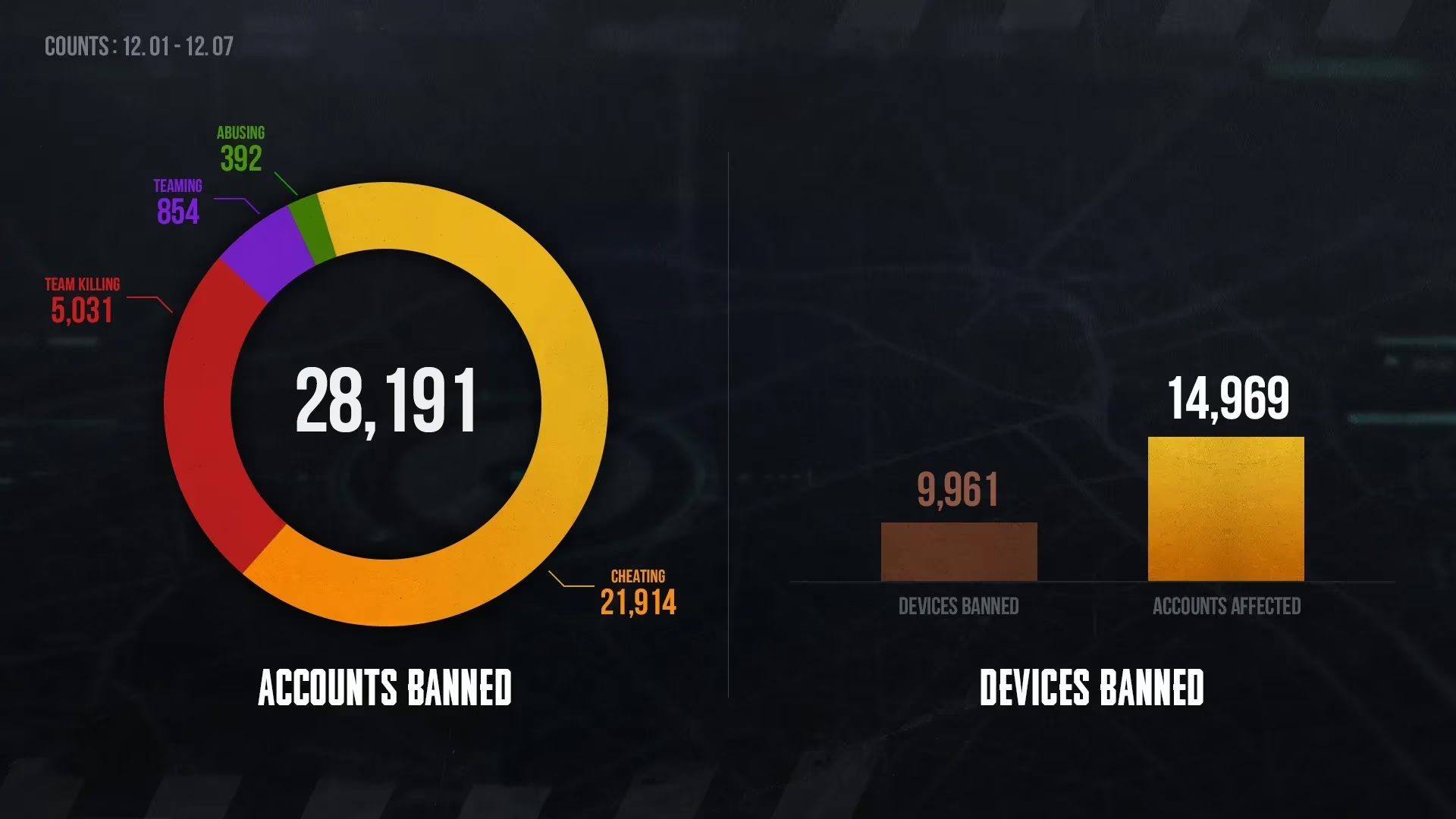
The bans cover a wide spectrum of misconduct: aimbots, wallhacks, speed hacks, teamkilling, and even harassment. Repeated offenses lead to permanent hardware bans, which prevent entire machines from ever rejoining the Battlegrounds. This zero-tolerance approach makes me feel safer every time I drop into Erangel or Taego. There’s a comfort in knowing that the system isn’t just reactive—it’s proactively scanning for illegal software with beefed-up kernel-level detection that has evolved significantly over the last few years. The anti-cheat team actively encourages players to file in-game reports first, which feed machine learning models trained to spot anomalous behavior. If additional help is needed, we can always reach out to PUBG Support. For me, hitting that report button after a suspicious death is like casting a vote for a cleaner gaming environment.
But the ban list isn’t just about punishing cheaters. It’s also a stark warning to those of us who might be careless with account security. The developers consistently stress that we should enable Steam Guard Mobile Authenticator. I ignored this advice for the longest time. One evening, a friend found his account hijacked and used to test illegal software—he was banned before he could even log in from his own PC. Watching him struggle to appeal made me immediately set up the authenticator. It takes less than five minutes, and it links your account to a constantly refreshing code on your phone. Even if a password gets leaked, a hacker can’t finalize a login without that code. Here’s a quick breakdown of how I see the benefits:
| Security Layer | Without Authenticator | With Authenticator |
|---|---|---|
| Login protection | Only password – easily stolen | Password + time-based code from phone |
| Trade & market | No extra confirmation | Must confirm via mobile app |
| Recovery option | Harder to prove ownership | Recovery codes provide backup access |
| Ban risk from hijacking | High if account misused | Drastically reduced |
By now, I’m convinced that two-factor authentication is as essential as a helmet in the game itself. The anti-cheat team’s message is clear: protect your valuable account so it doesn’t become a weapon for cheaters. I’ve also learned to avoid sharing account details, even with close friends, because you never know whose machine might be infected with hidden malware.
Another aspect I appreciate is the community’s role. The developers always end their announcements by saying they highly value our interest and opinions. In 2026, that is not just a courtesy line. Player feedback has led to genuine improvements—stricter penalties for teamkillers, faster replay validations, and in-game overlays that show when a reported player is banned. A few months ago, I reported a duo partner who downed me just to loot my gear. Two days later, I received an in-game notification that action had been taken. The emotional payoff was immense. It felt like the system was looking out for the little guy.
Of course, no anti-cheat is perfect. I still encounter occasional suspicious plays, and I sometimes worry about false positives. However, the transparency of weekly ban lists gives me faith that the team is listening and actively working on the issue. Every name on that list is a step toward preserving the heart-pounding tension that makes PUBG so special. For me, that payoff is worth every moment of patience.
As I gear up for another round of chicken dinners, I keep that banned list in the back of my mind. It’s a reminder that fair play isn’t just a slogan—it’s a shared responsibility. I report cheaters, I guard my account with Steam Guard Mobile Authenticator, and I encourage my squadmates to do the same. If you’re reading this and haven’t enabled that extra layer of security yet, please do it today. Let’s keep the Battlegrounds clean, one weekly ban wave at a time.