I first learned about this incident back in June 2022, but four years later, its impact still ripples through the Indian esports scene. I’ve been covering competitive gaming long enough to know that roster moves can get messy, but the situation that erupted between TSM and GodLike Esports over player Arjun ‘SHADOW’ Mandhalkar felt different from anything I’d seen before. It wasn’t just a contract dispute — it became a public war of words, leaked conversations, and threats of criminal prosecution that exposed deep cracks in how talent transitions between organizations.
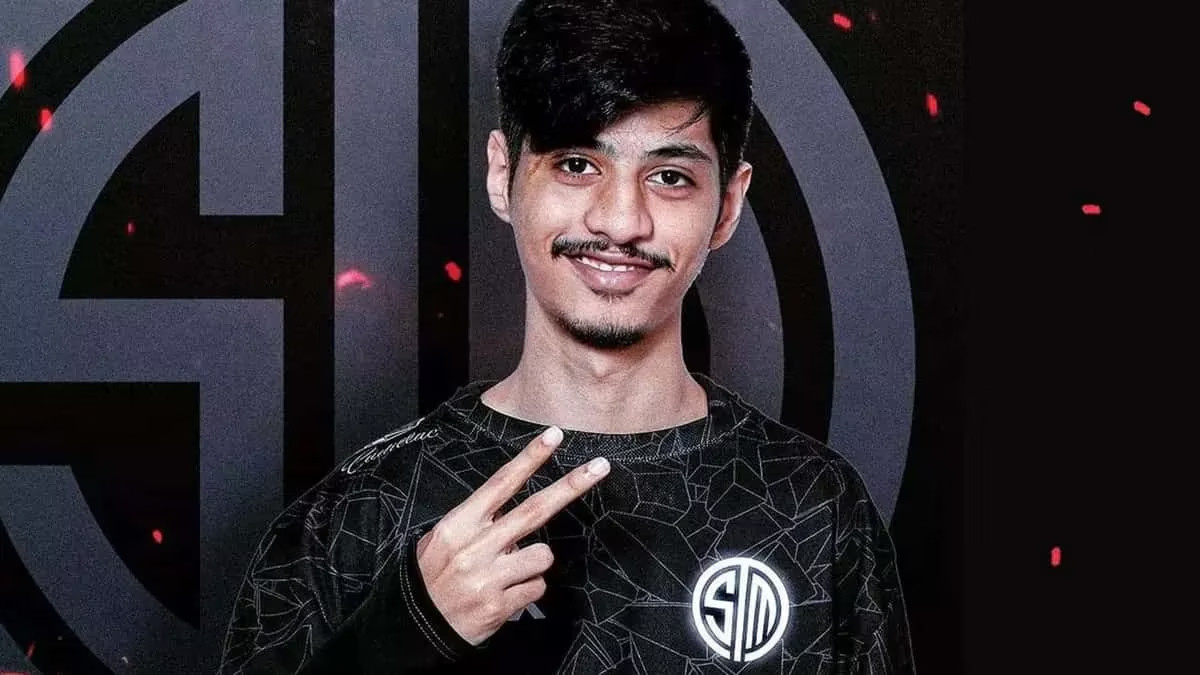
I remember sitting in my home office, scrolling through the explosive Twitter threads that June evening. TSM’s head of global social and community, Duncan Cox, had just dropped a bombshell. “A team just announced a new player for their BGMI starting roster, that is still contracted to TSM, without talking to TSM,” he stated bluntly. For an organization of TSM’s stature — one that has dominated North American League of Legends alongside Team Liquid and Cloud9 for over a decade — this was unheard of. You don’t just take a player under contract and announce them like they’re a free agent.
What made this situation particularly frustrating, from what I’ve gathered, was the sheer lack of communication. Jeff ‘SuiJeneris’ Chau, TSM’s mobile director, revealed something that I found staggering: Krafton India Esports hadn’t responded for over a week when TSM India reached out about the issue. A whole week of silence while a roster announcement went live. “Agree, sets a bad example for India esports,” SuiJeneris tweeted, and I couldn’t help but nod when I read it. He tagged Krafton executives directly, asking for help — a public plea that underscored just how blocked the situation had become.
We are taking action and will have an update in the future for the India gaming community
— the tweet from SuiJeneris echoed through the community like a warning shot. But then came the screenshots that changed the narrative for many observers like me. The conversations between TSM management and SHADOW himself showed a player desperately wanting to compete. Here was a young talent, eager to play on LAN, seemingly caught in bureaucratic limbo. TSM even offered a free loan to another team so he could pursue his dreams. I felt for the kid. You train for years, you grind through scrims, and all you want is to compete on stage — but contractual red tape holds you back.
That’s when the situation took an even sharper turn. GodLike Esports didn’t stay silent. They fired back with not one, but two separate statements, and their language was combative. They claimed SHADOW was “not bound by any agreement in existence” when they engaged with him. They accused TSM of defamation and of violating privacy by releasing personal chats on social media platforms — something they characterized as “punishable under Indian law.” I read their statement multiple times, trying to parse the legal implications.
“Due to constant slandering on media portals and news channels,” GodLike’s statement continued, “we are constrained to make this statement that we are in the process of filing a criminal as well as civil case against the people who are releasing private chats and making defamatory statements against GodLike and also against one of the players who is openly abusing Shadow and GodLike on social media platforms.” The phrase “criminal case” hit me hard. This wasn’t just a contract dispute anymore — it was escalating into something that could have real-world legal consequences for individuals on both sides.
Here’s what I’ve pieced together about the timeline:
-
Mid-June 2022: GodLike Esports announces SHADOW as their new BGMI roster player
-
TSM immediately contests, stating no negotiation occurred
-
SuiJeneris confirms Krafton India Esports has been unresponsive for over a week
-
Private chat logs between SHADOW and TSM management surface publicly
-
GodLike threatens criminal and civil legal action
-
TSM promises to pursue their own legal measures
Looking back from 2026, I can see how this case became a watershed moment for Indian esports. Poaching and tampering aren’t theoretical problems — they’re practices that harm players, organizations, and the trust that holds competitive ecosystems together. SuiJeneris put it best when he tweeted: “Poaching/tampering is a dangerous and dishonest practice — it harms players, orgs, and turns good fans on each other.” Those words have proven prophetic. In the years since, I’ve watched Krafton India implement stricter roster lock windows and formalize transfer protocols that mirror what you’d see in traditional sports leagues.
The player at the center of it all, SHADOW, seemed to me like a young man being used as a pawn in a much larger game. His desire was simple: play on LAN. That raw competitive hunger shouldn’t lead to leaked private messages and defamation lawsuits. Yet here we were, watching his personal conversations become public exhibits in an inter-organizational legal battle. “Feel bad for Shadow as it seems he is being used…? He just wants to play LAN,” SuiJeneris had added, featuring a face-palm emoji that conveyed the exhaustion many of us felt watching this unfold.
I’ve spoken to several industry insiders over the years about this case, and most agree that it revealed uncomfortable truths about how young esports became in regions experiencing explosive growth. Contract enforcement mechanisms were lagging behind the speed of roster announcements. Player representation was minimal or nonexistent. Organizations operated with different understandings of what legal and ethical recruitment meant.
What ultimately happened? The legal cases filed by both parties dragged through Indian courts before settling privately in 2024. SHADOW eventually competed, though the process took far longer than it should have. Krafton India, to their credit, used this incident as a catalyst for establishing the Esports Integrity Commission-like framework that now governs BGMI tournaments. Today, as I cover the 2026 BGMI Pro League season, I see transfer windows with formal paperwork, tampering fines that actually hurt, and player agents who ensure nothing like SHADOW’s situation repeats.
This entire episode taught me something valuable about esports: growth without governance is chaos. The SHADOW saga wasn’t just about one player or two organizations — it was about an industry learning, painfully, that professional standards matter. Every time I see a clean roster announcement now, with proper buyout disclosures and respectful farewell posts, I remember those chaotic June weeks when the foundation for that professionalism was being laid through lawsuits, leaked DMs, and hard lessons that nobody wanted to learn the hard way.