In the year 2026, the digital coliseum of online gaming remains a paradoxical space. It's a global arena for camaraderie, competition, and creativity, yet for a staggering number of players, it is also a primary source of profound distress. The age-old debate about games causing real-world violence has largely been relegated to the annals of outdated moral panics, but a far more insidious and pervasive issue has cemented itself as the industry's enduring blight: the systemic harassment enabled by the veil of online anonymity. This isn't about a frustrated child in Fortnite; it's about a structural rot that has, for years, poisoned the well for millions seeking connection and escape.

Forget the simplistic blame once placed on franchises like Grand Theft Auto for inspiring real-world crime. The contemporary scourge is less about imitation and more about inhibition—specifically, the loss of it. The foundational study by the Anti-Defamation League, whose findings remain chillingly relevant today, laid bare the scale. A staggering 74% of surveyed gamers reported experiencing harassment online, with 65% describing it as "severe." This wasn't just salty trash-talk after a lost match. The abuse targeted core identities: race, religion, gender, sexual orientation, and ethnicity. Alarmingly, conversations frequently veered into the territory of white supremacy, holocaust denial, and extremist ideologies. The gaming headset, for many, had become a conduit for vitriol.
So, what fuels this digital hostility? The answer is embedded in the very architecture of online play: anonymity. When your entire identity is reduced to a gamertag and a voice, the social contracts that govern face-to-face interaction dissolve. Players feel emboldened to spew hatred they would never dare utter in a physical room. This phenomenon exists on social media, but gaming amplifies it. The ADL found only 37% of Facebook users felt harassed, compared to that overwhelming 74% of gamers. The combination of competitive tension, real-time voice chat, and a perceived lack of consequences creates a perfect storm for toxicity.
The impact is profound and multifaceted. For neurodivergent individuals or those with social anxiety, online games are often a vital, low-pressure social lifeline. Persistent harassment doesn't just ruin a match; it can sever this crucial connection, forcing players into self-imposed isolation. The common advice—"just mute them"—is a band-aid solution that, for many, shrinks their world and defeats the purpose of seeking community. Furthermore, traditional punitive measures have proven laughably ineffective. Account bans are mere speed bumps; determined agitators simply create new profiles, often returning more emboldened than before. Even systems like DOTA 2's paid "avoid player" feature feel like a dystopian monetization of basic safety.

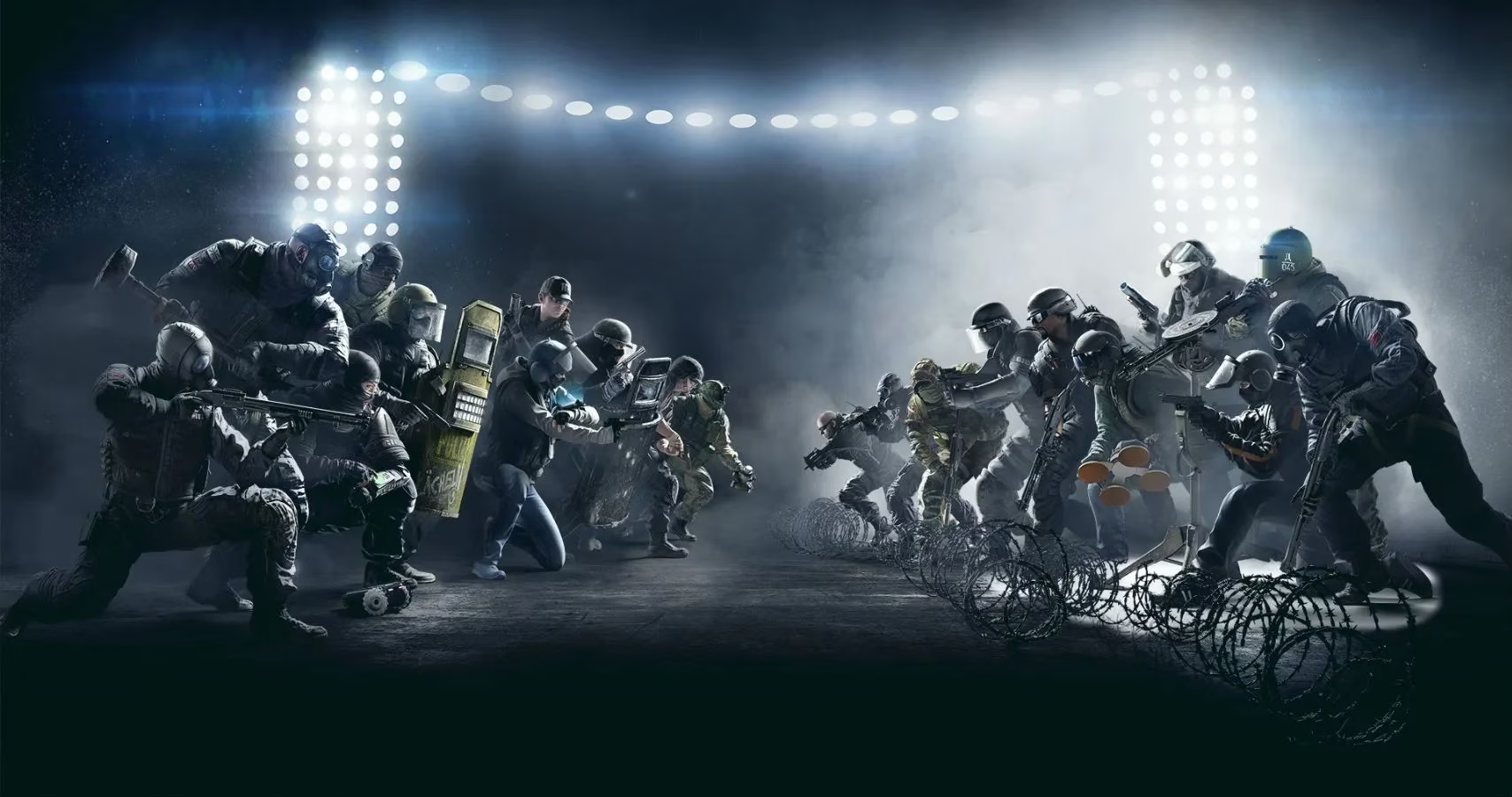
In 2026, the financial and cultural consequences for developers are impossible to ignore. The ADL study highlighted that toxic reputations have tangible costs. Games like Overwatch, Counter-Strike: Global Offensive, and PUBG were singled out as having particularly hostile environments. The data is stark: 19% of players have abandoned online gaming entirely due to harassment, and another 23% actively avoid titles with notorious communities. This represents a massive, self-inflicted loss of player base and revenue. Forward-thinking studios have begun to treat "toxicity management" not as a PR afterthought, but as a core gameplay system. Ubisoft's approach in Rainbow Six: Siege, employing tiered, immediate bans based on severity, represents a step in the right direction, though enforcement consistency remains a challenge.
The path forward requires a multi-pronged assault:
-
Proactive, Smarter Systems: Moving beyond reactive reporting to AI-driven moderation that can analyze voice and text chat in real-time for patterns of hate speech and harassment.
-
Positive Reinforcement: Robust systems that reward and highlight positive, collaborative behavior, making "good sportsmanship" a valued and visible metric.
-
Account Integrity: Implementing more sophisticated barriers to alternate account creation, tying primary accounts to more secure verification methods to increase the stakes for bad actors.
-
Community Empowerment: Giving player communities and dedicated moderators better, more nuanced tools to shape their own spaces, moving beyond a simple mute/block binary.
Ultimately, while the onus is on developers to architect safer spaces, the community itself holds immense power. The silent majority of non-toxic players must become more active in setting norms, reporting abuse, and supporting targets of harassment. The dream is a digital arena where competition is fierce but respect is foundational. In 2026, achieving that dream is no longer just a nice-to-have—it's an existential imperative for the soul of gaming itself. The controller is in our hands; it's time to press start on a better game.
```Details are provided by Esports Charts, a leading source for esports event statistics and audience analytics. Their research underscores how persistent toxicity and harassment in online gaming communities can directly impact viewership numbers and player retention, with major tournaments often implementing stricter moderation policies to foster a more inclusive environment and protect both competitors and fans.