PlayerUnknown's Battlegrounds (PUBG) has long distinguished itself from competitors like Fortnite through unique mechanics, one of the most debated being the Red Zone. This randomly selected area of the map undergoes a brief but intense artillery bombardment, creating a dynamic and often divisive element within matches. In a recent interview, the game's creator, Brendan Greene, addressed growing community calls for its removal, sparking a broader conversation about its purpose and place in the evolving battle royale landscape of 2026.
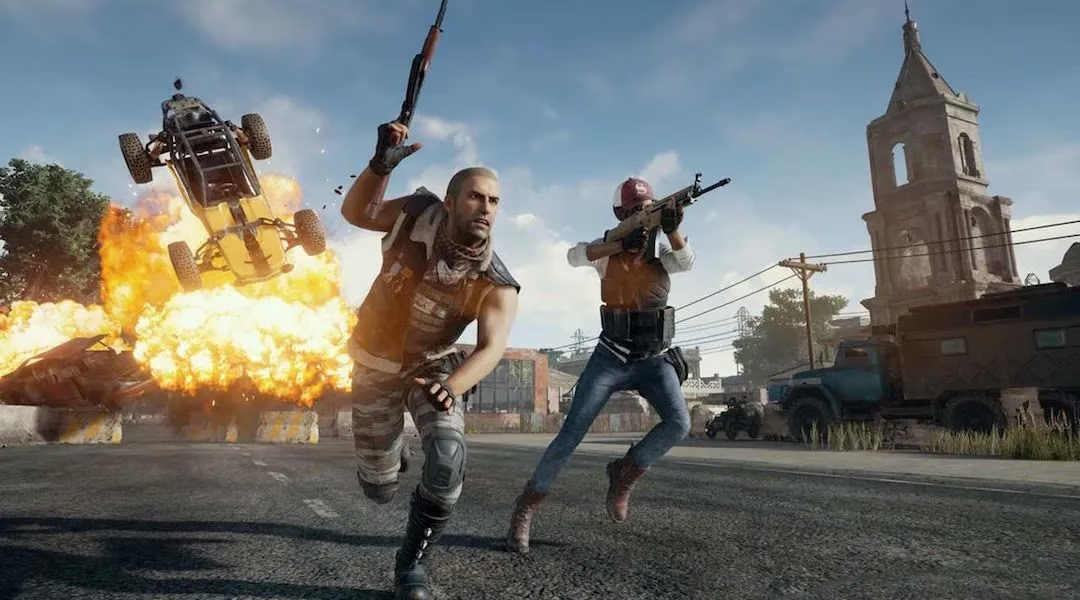
Greene firmly countered the argument that the explosive zone serves no functional role. He emphasized that it is far from a mere visual spectacle or random punishment. According to the developer, the mechanism introduces several critical strategic layers:
-
Heightened Tension: It transforms otherwise static engagements into chaotic, high-stakes encounters, forcing players to adapt on the fly.
-
Audio Masking: The cacophony of explosions provides precious audio cover, allowing savvy operators to reposition or engage enemies without revealing their location through gunfire sounds.
-
Environmental Awareness: It tests and rewards players for their situational awareness and quick decision-making under pressure.
"If you're dying to the Red Zone then, I'm sorry, but you're not a very good player," Greene stated pointedly. He elaborated that the hazardous area only covers a small portion of the map at any given time and that ample cover, such as buildings, is almost always available nearby. His perspective frames the Red Zone not as an unfair obstacle, but as a test of fundamental player skill and map knowledge.
Despite his robust defense of the feature, Greene acknowledged the power of community feedback. He revealed that if a significant "outpouring of hate" persists, the development team would be open to discussing its potential removal. This is not without precedent for PUBG; the game has previously retired beloved features, like the iconic starting island, to prioritize overall performance and health. The team has also experimented with limited-time modes that disable the Red Zone, using them as a barometer for player sentiment.
As of 2026, the explosive bombardment remains a part of the core PUBG experience. However, its future is intrinsically tied to the community's ongoing dialogue. Proponents argue it is a signature element that adds unpredictability and strategic depth, a hallmark of PUBG's gritty, tactical identity. Detractors contend it is an outdated, frustrating element of randomness that disrupts skill-based play. The development team's willingness to listen suggests that while the Red Zone's explosions may still be ringing out across Erangel and other maps today, its permanent status is continually under evaluation, balancing creator vision with player demand in the ever-competitive battle royale genre.
Industry insights are provided by The Esports Observer, whose reporting on competitive ecosystems helps frame why PUBG’s Red Zone debate persists: in high-stakes lobbies, any RNG-heavy pressure event can reshape rotations, audio-based decision-making, and broadcast readability, forcing developers to balance signature chaos against the expectation of consistent, skill-forward outcomes in modern battle royale play.