I remember the first time the digital poison gas began to close in on me. It was 2015, and the voice of a defeated player, already a corpse on the dusty ground, screamed a vile curse into my headphones. Yet, in that moment of virtual violence, I felt something I hadn't in so long while gaming: a pure, unadulterated pulse of life. This wasn't just another match; it was my seventh descent into the chaotic arena of H1Z1: King of the Kill. I had watched the Arma mods from afar, a spectator to the burgeoning chaos, but here I was, boots on the ground. The standard survival mode felt sloppy, aimless. But this? This had urgency. This had a singular, terrifying purpose: be the last one standing. And in that failure—my 12th place finish with three kills—I found a strange, profound victory. I had done better. Isn't that, sometimes, enough?
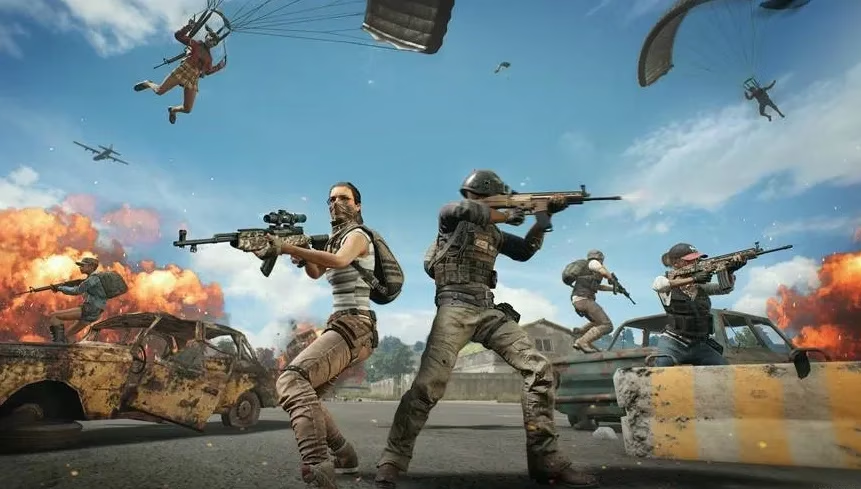
The seeds for this revolution were planted long before my personal awakening. While Fortnite struggled in development purgatory for years, a genre was being forged in the fires of player creativity. Can you imagine it? A simple Minecraft plugin called Hunger Games, where players scrambled for gear in a deadly free-for-all. Then came the visionary, Brendan Greene, who took the survival DNA of DayZ and weaponized space itself, forcing conflict with a shrinking, poisonous circle in his Arma mods. His consultation birthed H1Z1: King of the Kill, which sold a million copies in mere months and even launched a televised esports scene. But the true earthquake was still to come.
The PUBG Phenomenon: A Genre Explodes
When PlayerUnknown's Battlegrounds left beta, it didn't just enter the market; it detonated it. I played the beta and cautiously predicted a "bright future." How laughably quaint that seems now, looking back from 2026. PUBG didn't have a bright future; it was the future, for a time. It blew the doors off Steam, shattering concurrent player records held by titans like Dota 2. Selling over 40 million copies in a year, it wasn't just a game; it was a cultural reset. The formula was hypnotic:
-
The Unpredictable Cycle: Every match was a 30-minute story with a random first page. Where you landed, what loot you found, where the circle moved—it was all a beautiful, tense gamble.
-
Tension as a Game Mechanic: The slow, inexorable shrink of the safe zone. The distant crack of a rifle shot, followed by the sobering list of eliminated players in the corner of your screen. Each one gone meant you were one step closer.
-
The Democratization of Victory: This was the masterstroke. You didn't need to be a sharpshooter. You could win by hiding, by healing, by sheer, stubborn survival. The dream that even someone who "sucked at shooting" could triumph was tantalizingly real.
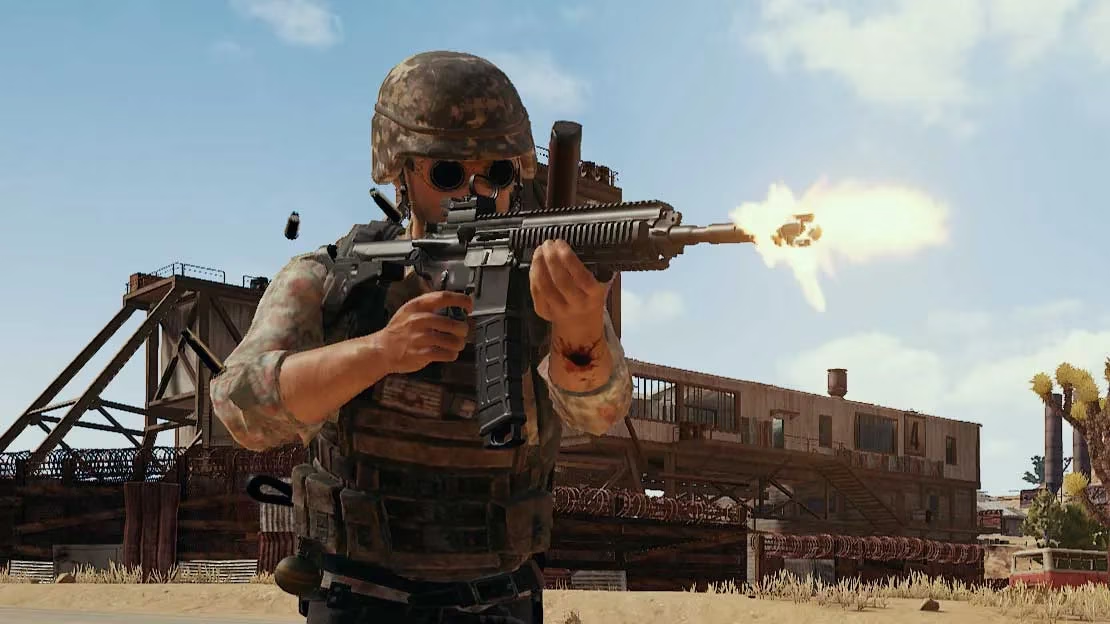
And then, of course, came Fortnite. While its prolonged development yielded a lukewarm co-op shooter, its pivot to battle royale was the stuff of legend. In just two months, Epic Games assembled the mode that would conquer the world. It became inescapable. My 78-year-old mother, who never understood my writing about games, asked me about it. Ninja streamed with Drake. The "Take the L" emote was performed on a Major League Baseball field. Battle royale wasn't just a genre; it was the atmosphere we breathed.
The Gold Rush and the Hard Lessons
For developers, the siren song was irresistible. The concept seemed deceptively simple: a map, scattered loot, 100 players, a shrinking circle. If PUBG could be built in a year and Fortnite's mode in two months, why couldn't anyone strike gold? The industry charged headlong into a battle royale frenzy.
| Game | BR Mode / Focus | Outcome / Legacy |
|---|---|---|
| Call of Duty: Black Ops 4 | Blackout | Enjoyed, but didn't stick long-term |
| Battlefield V | Firestorm | Similar fleeting engagement |
| Apex Legends | Standalone Hero BR | A major, lasting success (2019) |
| The Culling / Darwin Project | Indie Standalone | Initial curiosity, then player fade |
| Radical Heights | F2P BR from Boss Key | Failed to save the studio; closed quickly |
| Fallout 76 | Nuclear Winter | A late, small addition to the fray |
The list goes on: GTA Online, CS:GO, Dota 2, Civilization 6, Dying Light, Ghost Recon Wildlands. A dozen indie hopefuls sprouted like mushrooms after rain. But the brutal truth of the genre, mirroring the MOBA scene before it, became clear: there is only room for a few on the podium.
Players and streamers would dabble in the new hotness, but they always, always returned to the polished ecosystems of Fortnite and PUBG. Free-to-play transitions couldn't save games like Z1 Battle Royale. Radical Heights, with its wacky game-show aesthetic and BMX tricks, was a last, desperate gasp for a studio that closed within a month. The brass ring was there, but it was guarded by a dragon named Live Service.
The Impossible Standard: Life After the Rush
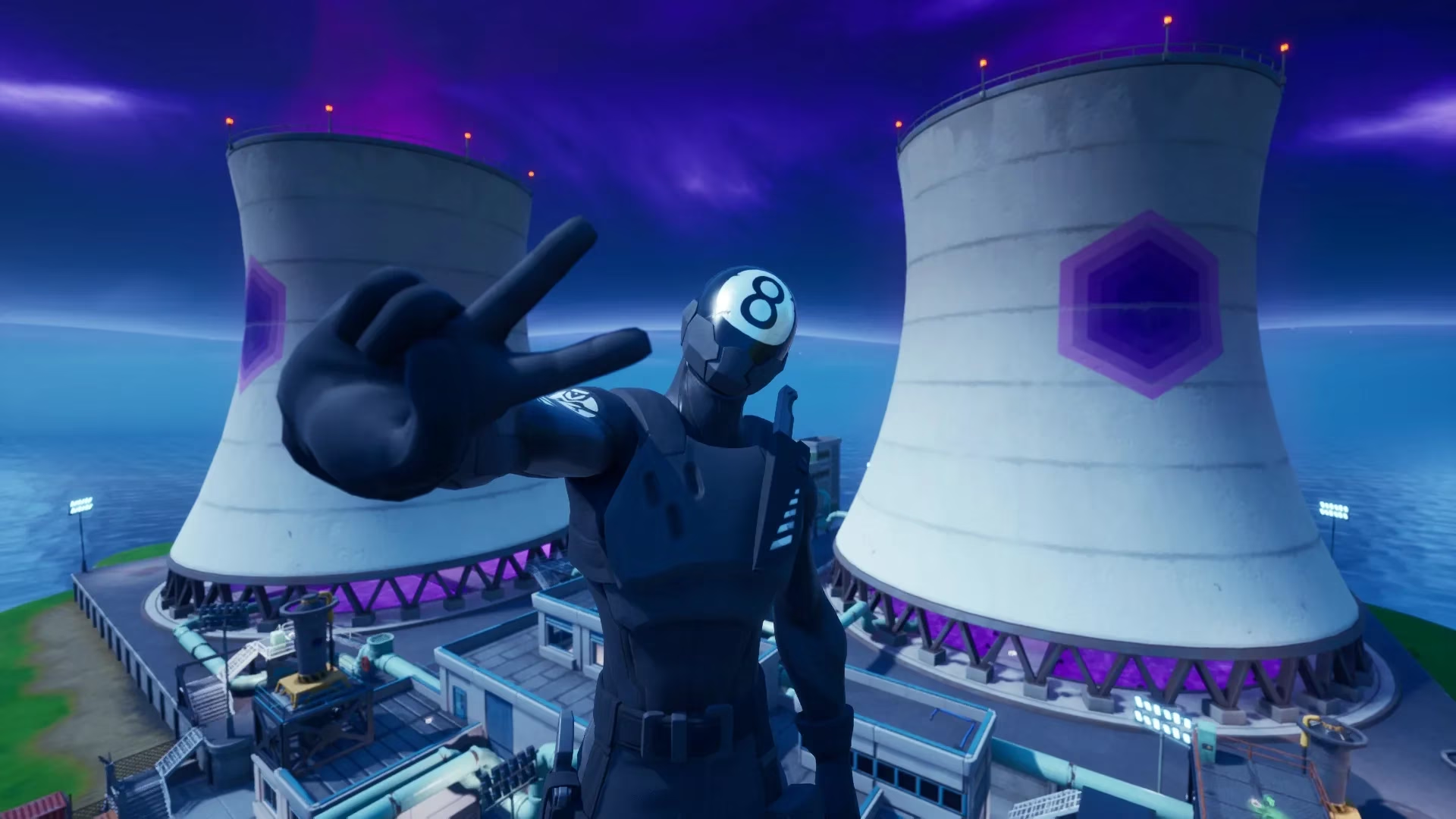
What did we learn? That making a good battle royale is hard, but making a lasting one is a Herculean task. Fortnite didn't just set a bar; it built a skyscraper of expectations. Its model became the new, nearly impossible standard:
-
🚀 Frequent, seismic updates and map changes
-
🎪 In-game events that felt like global cultural moments
-
🏆 Massive tournament prize pools
-
📦 Bulky, content-rich season passes
Who else could shut down their entire game for two days as a marketing stunt and have the world hold its breath? No one. The gold rush that defined the late 2010s is over. By 2019, the flurry of E3 BR announcements had dwindled to a trickle. The lesson was internalized: the formula is not simple. It is a foundation upon which you must build a relentless, evolving, engaging service.
Now, in 2026, battle royale still dominates, but as a mature plateau, not a frantic peak. Fortnite and PUBG remain pillars, with Apex Legends holding its strong territory. New contenders are fewer and more calculated. The genre's initial wild west has been civilized, its borders defined. I still drop in sometimes, feeling that old heartbeat of tension as the circle closes. But I also remember the curse screamed in 2015, not with malice, but with a strange nostalgia. It was the sound of a genre being born raw and angry and exhilarating—a digital hunger game that taught us all that survival, in any form, can feel like winning.