As competitive gaming continues to dominate the entertainment landscape in 2026, a revealing study from the University of Leeds has resurfaced, offering fresh insights into how popular first-person shooter (FPS) and battle royale titles affect player stress. The research, originally commissioned by sportsbook BetVictor, compared the physiological and psychological responses of 32 experienced gamers while playing Apex Legends, Call of Duty: Warzone, CS:GO, and PUBG. Its findings challenge common assumptions about which games are truly relaxing—and which ones might be taking a hidden toll.
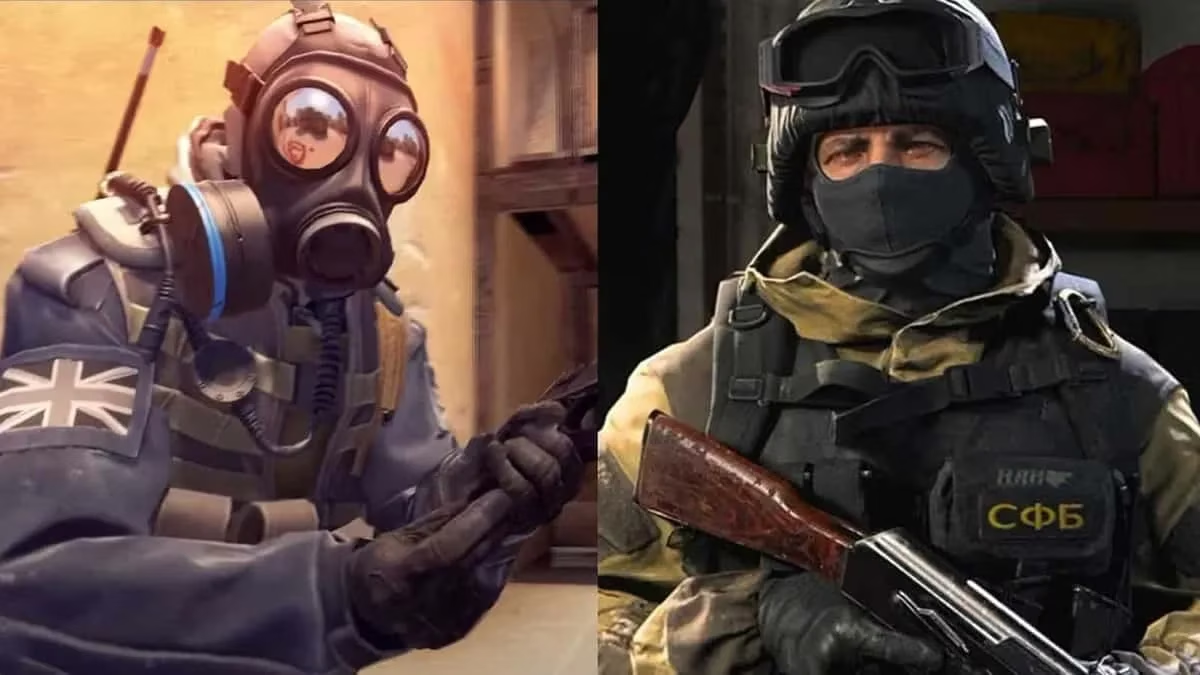
The study aimed to measure stress by tracking heart rate (BPM) and blood pressure immediately before and after a standard gaming session. Participants, all self-rated as “good” or “expert” in their chosen title, were isolated to a single game to isolate the title’s specific impact. By combining human biology and psychology approaches, the Leeds team produced one of the few head-to-head comparisons of stress responses across major FPS games.
Key physiological findings 💓
Apex Legends players recorded the highest average heart rate after playing. Their BPM leapt significantly, suggesting a sustained fight-or-flight response even after the match ended. At the opposite end of the spectrum, CS:GO was the only title that actually produced a net decrease in heart rate. The slower, more tactical pacing—punctuated by short bursts of action—seemed to give players’ cardiovascular systems a chance to recover, leading to a post-game BPM below their pre-game baseline.
Warzone and PUBG both raised heart rates moderately, though neither reached the peaks seen in Apex. The researchers attributed this to the large-scale, unpredictable nature of battle royales: long periods of quiet looting interrupted by sudden, high-stakes encounters.
The psychological surprise 🧠
Despite the physical reactions, the study’s most counterintuitive takeaway came from the STAI (State-Trait Anxiety Inventory) tests. Every single game led to a measurable reduction in self-reported stress and anxiety. Even Apex Legends, which triggered the highest heart rates, ended up leaving players less anxious than when they started. However, the magnitude of stress relief varied significantly:
| Game | Heart Rate Change | Stress Reduction (STAI) |
|---|---|---|
| Apex Legends | Highest ↑ | Smallest ↓ |
| Call of Duty: Warzone | Moderate ↑ | Second-largest ↓ |
| PUBG | Moderate ↑ | Third-largest ↓ |
| CS:GO | Decrease ↓ | Largest ↓ |
Players of CS:GO reported the greatest drop in anxiety, followed closely by Warzone, then PUBG, with Apex Legends bringing up the rear. One explanation lies in the pre-match anticipation. The Leeds team noted that CS:GO participants actually began their sessions with the highest baseline anxiety, possibly due to the game’s reputation for steep skill curves and intense “clutch” moments. Once immersed in the controlled chaos of a match, that tension dissipated, whereas Apex Legends maintained a more constant level of high alertness.
Why do stressful games still relieve stress? 🤔
At first glance, it seems contradictory: a game that makes your heart pound can still leave you calmer afterward. The researchers pointed to the psychological concept of eustress—a positive form of stress that promotes focus and excitement without tipping into distress. When a challenge feels manageable and the player is in control, the body’s stress response can act like a mini-workout for the mind, leaving behind a sense of accomplishment and release. This echoes findings in other areas of performance psychology, where deliberate exposure to controlled pressure strengthens emotional resilience.
Additionally, the social element cannot be ignored. All four titles feature squad or team dynamics that provide camaraderie and shared purpose. For many players, the banter and cooperation during a match reduce feelings of isolation—one of the hidden drivers of chronic stress in modern life.
What about the long term? ⏳
While a single session may lower anxiety, the Leeds study did not track prolonged effects. Experts caution that repeatedly exposing oneself to extreme cardiovascular spikes could have diminishing returns. Apex Legends’ fast-paced, ability-driven combat demands near-constant vigilance, which might explain why its stress-reduction benefit was the lowest. Casual play is likely fine, but if a game consistently leaves you drained rather than refreshed, it might be time to broaden your library.
In 2026, these insights remain especially relevant. Esports athletes and hobbyists alike are more aware of mental health than ever, and gaming wellness is a growing industry. Tools like heart rate monitors and guided post-game breathing routines are now common in training facilities. The Leeds study, though small in scale, provides a data-backed starting point for gamers who want to choose titles that align with their emotional needs.
Practical takeaways for players 🎮
-
If you want the biggest relaxation payoff: Consider CS:GO or tactical shooters that reward patience and strategic thinking over constant twitch reflexes.
-
If you thrive on adrenaline but still want to unwind: Warzone and PUBG offer a middle ground, where high-tension moments are balanced by downtime.
-
If you find Apex Legends leaving you more wired than calm: You’re not alone. Mixing in single-player or cooperative modes might help restore balance.
Ultimately, the study reminds us that not all stress is bad—and that gaming, even at its most intense, can still be a net positive for mental well-being. The key is knowing your own limits and recognizing when a hobby starts to feel like a job. As the Leeds team concluded, even the most stressful shooters “can actually be great stress relievers.” Just don’t be surprised if your heart rate monitor tells a different story than your mood.