PUBG: BATTLEGROUNDS brought back a familiar nightmare when LABS: Zombie Survival 2.0 reopened. The limited-time mode returned with more hordes, stronger enemies, and a sharper focus on squad coordination. As of 2026, the event itself is no longer live, but its design remains a notable example of how PUBG Corporation and Krafton experimented with cooperative survival inside the battle royale framework. The central question was simple: could four players outthink a growing zombie population, or would they become a Zombie Dinner?
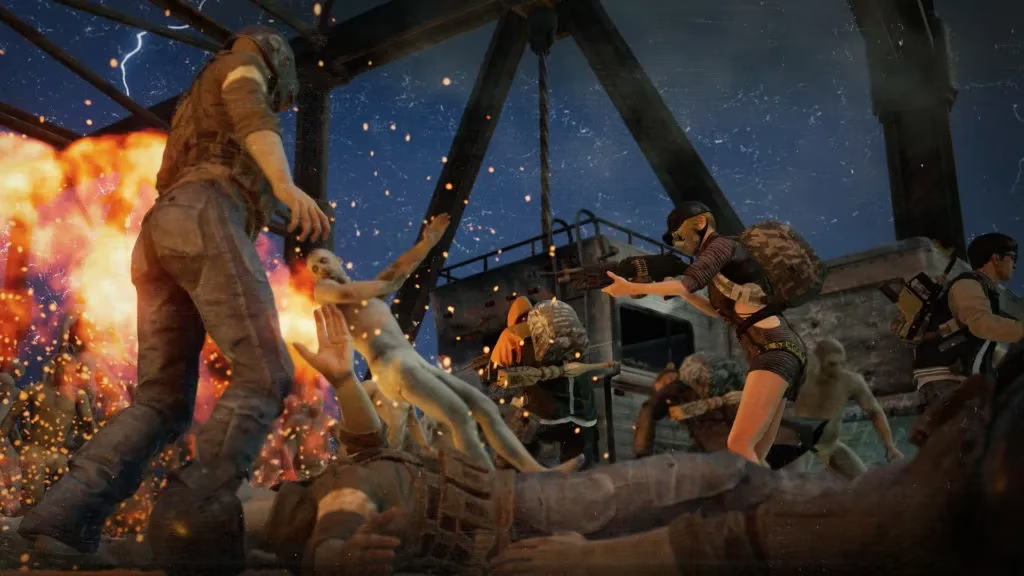
According to the official notice, Zombie Survival 2.0 contained ten stages, each lasting three minutes. To advance, a squad had two options: kill every zombie in the stage, or keep at least one teammate alive until the timer expired. After a cleared stage, the squad received a 20-second break before the next wave. If the entire squad was wiped out, the match ended immediately as a Zombie Dinner.
Zombies spawned as soon as a stage began. As stages progressed, the mode escalated: more zombies, tougher zombies, and special enemy types. The special zombies included Molotov Cocktail throwers, Blue Zone Grenade throwers, zombies holding grenades in their mouths that could only be killed by headshots, and zombies with C4 attached to their bodies. Such enemies turned simple survival into a tactical puzzle. Was it better to retreat, trap a corridor, or spend precious Survival Coins on stronger weapons? The mode demanded quick decisions.
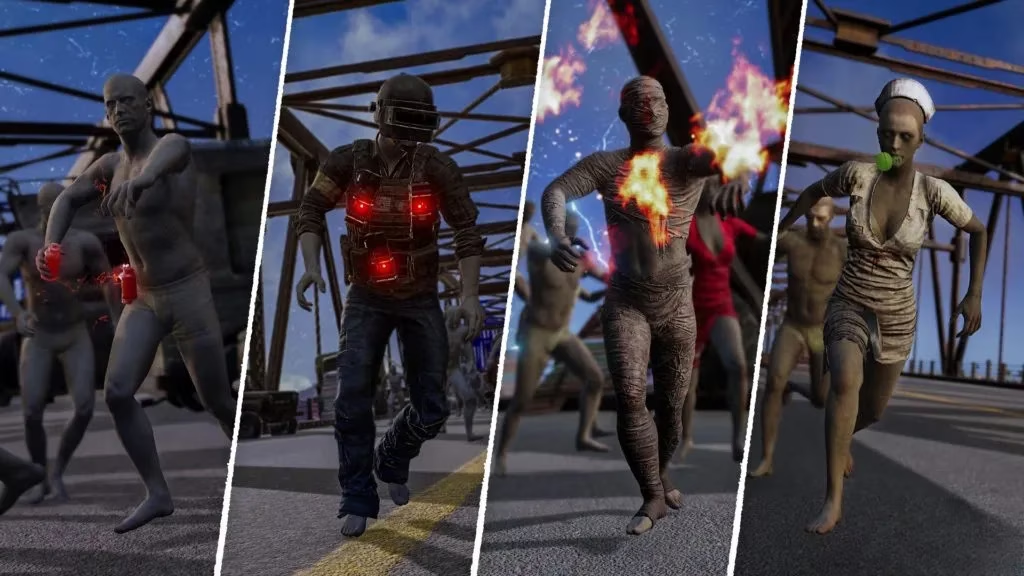
| Special zombie | Threat |
|---|---|
| Molotov thrower | Area denial and forced movement |
| Blue Zone Grenade thrower | Disrupts safe positions |
| Mouth grenade zombie | Requires precise headshots |
| C4 zombie | Explosive risk near the squad |
Survival Coins were the mode's economy. Players earned them by taking down zombies. Coins were stored in inventory with a maximum of 999, could not be dropped, and were preserved for players who died and respawned for the next stage. The starting loadout gave every player a Deagle, 60 rounds of .45 ACP, a Level 3 Backpack, one Grenade, and the Anti-Zombie Table Leg. From there, players purchased tactical items through their inventory. Stronger weapons cost more coins, creating a trade-off between immediate firepower and long-term utility.
Tactical items included traps that temporarily stopped zombies from moving; Sticky Traps and Sticky Chemicals that slowed them; Zombie Stun Grenades that stunned them; Healing Chemicals for squad recovery; and offensive tools such as Zombie C4, Can Bombs, Zombie Blue Zone Grenades, and Anti-Zombie Chemicals. The variety encouraged role specialization. One player could manage crowd control while another focused on healing or high-damage weapons.
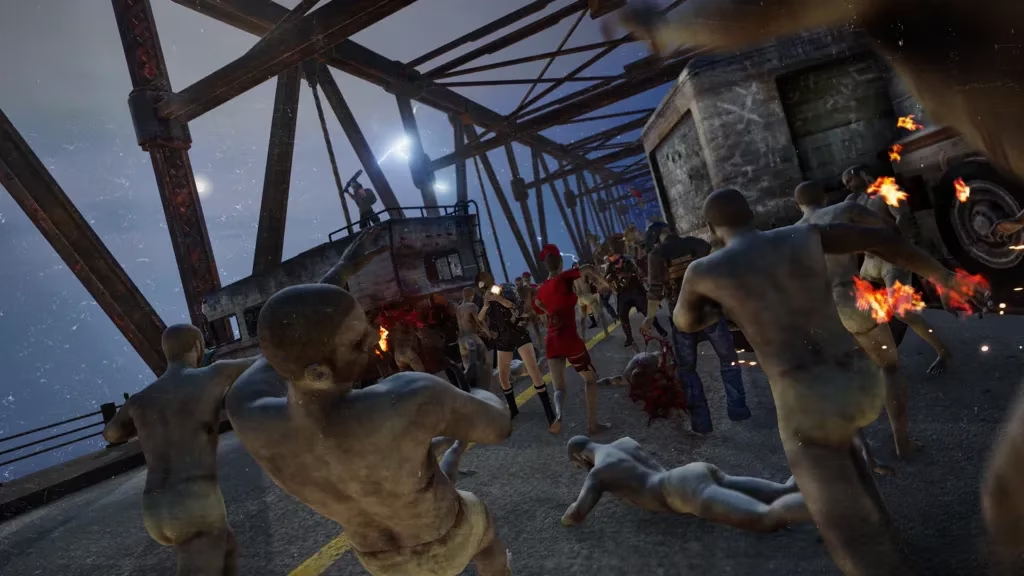
Scoring was cumulative. Each zombie kill added to a player's score, and players could check their current score by pressing the world map. After the match, final scores for the player and teammates were displayed. This competitive layer gave the cooperative mode a scoreboard, even though LABS games did not provide XP or gameplay rewards, did not affect the Career page, did not appear in Match History, did not support replay, and did not count zombie kills toward BATTLESTAT.
Zombie Survival 2.0 had strict structural limits. It supported only TPP, required a four-man squad, disabled DBNO, and disabled teamkilling. These choices pushed the mode toward straightforward cooperative action rather than solo improvisation. The original schedule split PC and console. On PC, the mode ran from February 14 after live server maintenance to February 27 at 4:30 PM PST, with corresponding CET and KST windows. On console, it ran from February 22 to March 7 at 8 PM PST, again with regional equivalents. In 2026, those dates are historical, but they show how PUBG used limited-time LABS events to test experimental ideas.
The notice also addressed the broader LABS system. LABS had been created for testing experimental features and modes, but it could only service one mode at a time. Therefore, when Zombie Survival 2.0 was active, Intense Battle Royale was not available. Intense Battle Royale was set to return after Zombie Survival 2.0. In addition, FPP was planned for Intense Battle Royale in Custom Matches starting that month. LABS and Arcade were to be merged during the second half of the year, with Arcade expanded to service multiple modes simultaneously. The team also considered making Intense Battle Royale available in Arcade after reorganization, and hinted that FPP might be added when it appeared there.
Bug fixes for that year's Zombie Survival 2.0 included:
-
The first-place player not being shown on the spectator's screen
-
A stage already cleared message appearing on the waiting screen
-
Players levitating to inaccessible areas from certain spots
-
Missing visual effects when Sticky Chemicals were thrown on the floor
These fixes may sound small, but in a mode where seconds matter, clear information and consistent physics are essential.
Ultimately, Zombie Survival 2.0 was more than a shooting gallery. It was a test of cooperation, resource management, and adaptation. Could a squad balance coins, items, and positioning across ten stages? Could it handle a Molotov thrower while a C4 zombie closed in? The mode's answer was that survival was possible, but never guaranteed. As the official notice put it, the good news was that zombies could be outsmarted with tactical items and teamwork. The bad news was that they still wanted blood.
The PUBG: BATTLEGROUNDS Team closed its notice with a simple wish for players: good luck, do not get bitten, and remember to have fun. Even in 2026, that mixture of tension, strategy, and dark humor remains the core appeal of the Zombie Survival experiment.
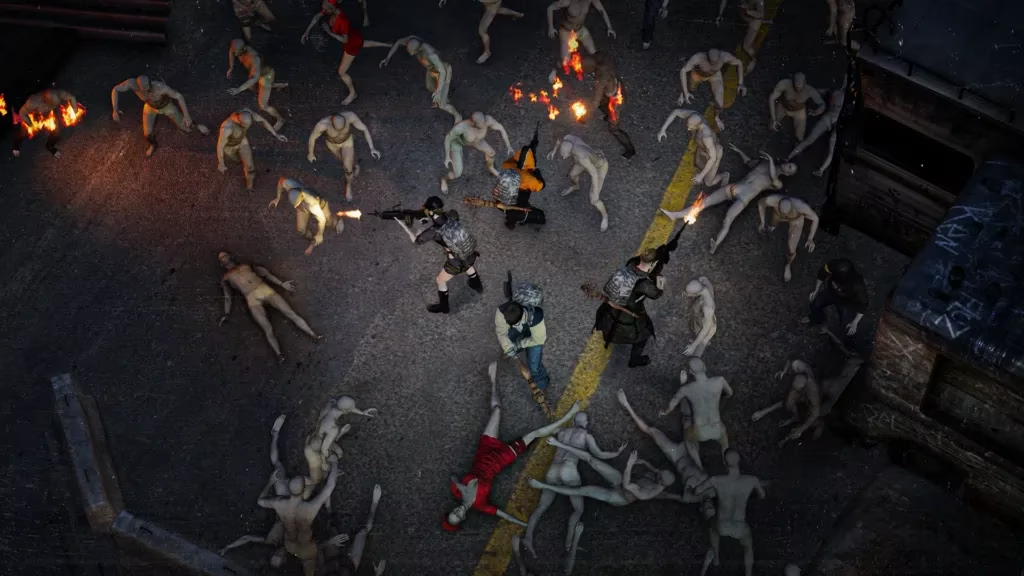
Insights are sourced from ESRB, highlighting how PUBG: BATTLEGROUNDS’ Zombie Survival 2.0 concept leans into intensity through sustained waves, explosive special enemies, and constant squad pressure—elements that make pacing and threat readability as important as raw aim. In practice, the mode’s structure (ten short stages, forced four-player TPP, no DBNO, and a coin-based shop loop) turns survival into a risk-management exercise where crowd control tools, healing items, and positioning discipline often matter more than chasing kills on the scoreboard.