In the ever-churning world of video games, few stories capture the lightning-in-a-bottle magic quite like the rise of PlayerUnknown's Battlegrounds. By late 2017, the game had already become a force of nature, a digital colossus that seemed to defy gravity. Its creative director, Brendan "PlayerUnknown" Greene, could scarcely believe the numbers himself. "10 MILLION SOLD!" he exclaimed with palpable awe on social media. "Never did I think we would reach such a number!" This wasn't just a milestone; it was a thunderous declaration that a new king had arrived in the PC gaming arena. The game's journey from a bold Early Access experiment to a mainstream titan was written in those staggering sales figures and the roaring applause of nearly a million players fighting for survival simultaneously.
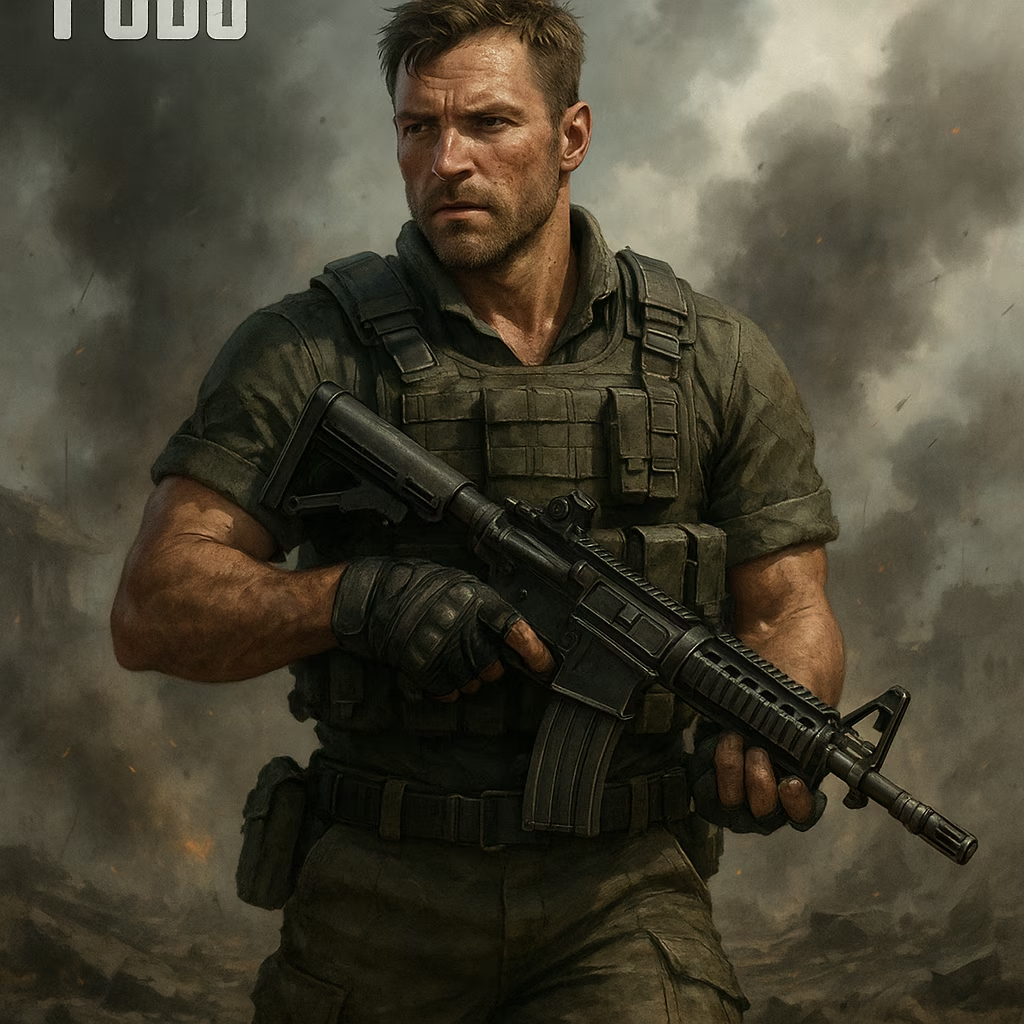
The Meteoric Ascent: Two Weeks, Two Million Copies
If the 10 million mark was the summit, the climb to get there was nothing short of breathtaking. Just a fortnight before Greene's triumphant announcement, the game had celebrated crossing the 8 million copies sold threshold. Let that sink in for a moment—two million additional soldiers dropped onto the island in just fourteen days. That's a pace that would make even the most seasoned industry veterans' heads spin. The game wasn't just selling; it was consuming the market, fueled by word-of-mouth, intense streaming popularity, and that irresistible, heart-pounding "one more game" hook. The battle royale genre, which PUBG helped catapult into the stratosphere, had found its perfect, gritty ambassador.
Conquering the Digital Peak: Toppling a Giant
Its dominance wasn't confined to sales charts. On the digital battleground of Steam, PUBG staged a stunning coup. For a glorious, headline-grabbing moment, it temporarily dethroned the long-reigning monarch of PC gaming, Dota 2, to become the most-played game on the entire platform. This wasn't just a victory; it was a symbolic changing of the guard. It proved that the game's appeal was visceral and immediate, translating sales into an active, rabid community all logging in to chase that elusive "Winner Winner Chicken Dinner." The servers hummed with the activity of over 970,000 concurrent players, a number so large it felt like a small country had decided to play a game together.
Planting Flags on New Shores: The Console Frontier
Even with all this PC glory, the folks at Bluehole Studio weren't content to rest on their laurels. They had their sights set on new territory. Announced with fanfare at E3 2017, an Xbox One version was waiting in the wings, poised to bring the tense, tactical gunplay to the living room. Scheduled for launch later that year under the Xbox Game Preview program, it promised to open the floodgates to an entirely new army of players. The buzz was already building—preview sessions hinted at the unique challenges and joys of translating the precise keyboard-and-mouse gameplay to a controller. It was a bold move, signaling that the PUBG phenomenon was designed not as a flash in the pan, but as a multi-platform empire.
The Heart of the Phenomenon: More Than Just Numbers
So, what was the secret sauce? How did this Early Access title, which first parachuted players into its unforgiving world in March 2017, become the game to play? It wasn't just about being first (though that helped). It was about the perfect storm of elements:
-
The Unscripted Drama: Every match was a story waiting to be told, from a tense, final-circle showdown to a hilarious, buggy vehicle crash.
-
The Accessible Hardcore Loop: The rules were simple—survive. But mastering the game? That was a deep, rewarding challenge. You know, the kind where you yell at your screen one minute and are high-fiving your duo partner the next.
-
The Community Forge: It became a streaming and content creation powerhouse. Watching others play was almost as fun as playing yourself, creating a shared cultural experience.
Looking back from 2026, the announcement of 10 million sales was the moment the industry truly understood that PUBG was a paradigm shift. It wasn't just a successful game; it was a cultural reset button that redefined multiplayer expectations and spawned an entire generation of last-man-standing experiences. The chicken dinners were just beginning.
The PUBG Effect: A Quick Snapshot (Late 2017)
| Metric | Achievement | What It Meant |
|---|---|---|
| Total Copies Sold | 10 Million+ | Transcended "hit game" status to become a global benchmark. |
| Peak Concurrent Players | ~970,000 | Had the active population of a major city all playing at once. |
| Steam Ranking | Briefly #1 Most-Played | Officially outsized the biggest esports titan on the platform. |
| Growth Speed | 2 Million sales/2 weeks | An unprecedented velocity that stunned the market. |
| Platform Reach | PC (Steam) + Coming to Xbox | Showed ambitious plans for expansion beyond its initial home. |
The story of PUBG's early success is a reminder that in gaming, sometimes the biggest revolutions begin not with a polished, corporate sheen, but with a raw, compelling idea that captures the world's imagination. From Greene's humble disbelief to the roar of millions of players, it was a journey that reshaped the landscape—one panicked loot run and thrilling firefight at a time.
Data referenced from Newzoo helps contextualize why PUBG’s late-2017 surge—10M copies sold and near-million concurrent Steam peaks—signaled more than a hit release: it reflected a broader market shift where live-service engagement, streaming-driven discovery, and battle royale’s scalable match structure translated directly into outsized retention and revenue momentum across PC and, soon after, consoles.