As a long-time player of competitive shooters, I've seen my fair share of cheaters ruining the fun. But recently, something fascinating has been happening in PlayerUnknown's Battlegrounds. Have you ever wondered what happens to players who use cheat software after they're caught? Well, it turns out developer Bluehole has come up with a rather clever, almost poetic form of justice. Instead of immediately banning suspected cheaters, they're being quietly funneled into matches... with each other! Isn't that a brilliant way to let them experience the frustration they've been causing?
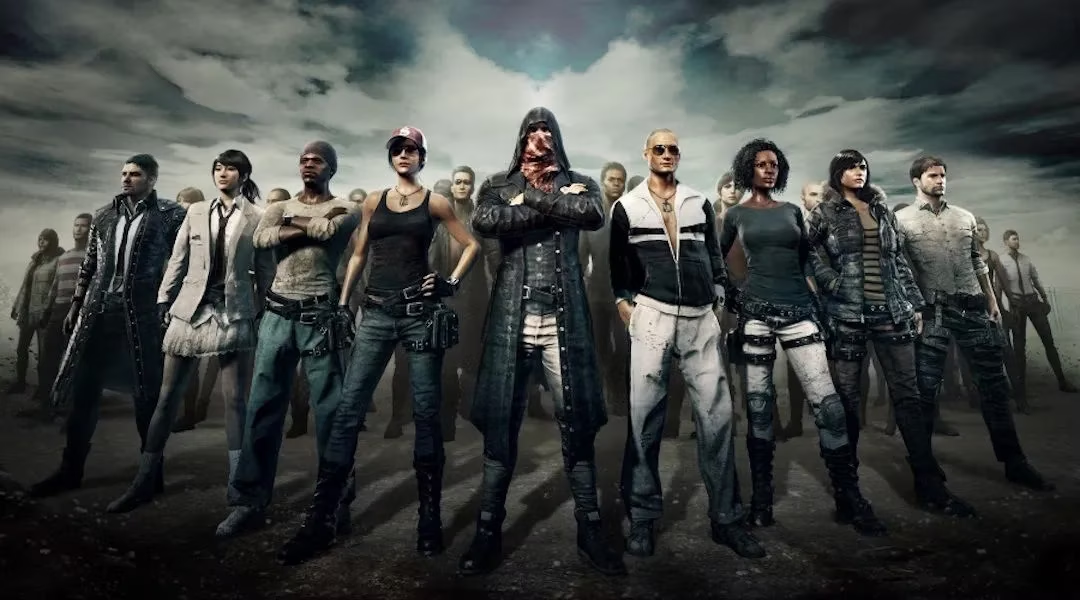
The Cheater's Queue: A Self-Contained Hell
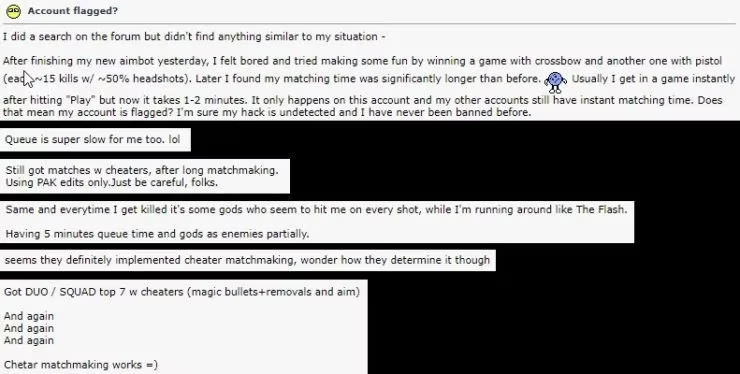
Reports started surfacing on the PUBG subreddit, referencing posts from actual cheat forums. Can you imagine the irony? Notorious cheaters with multiple accounts began noticing something strange—their matches were suddenly filled with other players using obvious cheats. These players, confident their software was undetectable, found themselves in lobbies where everyone had wallhacks, aimbots, and other unfair advantages. What's the point of cheating when everyone else is doing it too? The very sense of accomplishment they sought became meaningless.
Not a New Concept, But a Smart Application
This approach isn't entirely new in gaming history. Remember when Xbox One implemented its reputation system? That system essentially did the same thing—grouping toxic players, griefers, and cheaters together while maintaining cleaner experiences for legitimate players. But PUBG's implementation feels particularly fitting for the battle royale genre. Think about it: in a game where only one player or team can win, forcing cheaters to compete against each other creates a special kind of purgatory. Their Chicken Dinners become hollow victories, knowing they only 'won' against other cheaters.
The Numbers Behind the Battle
Let's look at some key statistics about PUBG's anti-cheat efforts:
| Anti-Cheat Measure | Impact/Statistic |
|---|---|
| Total Bans (Since Early Access) | 80,000+ players |
| Primary Ban Reasons | Third-party software, exploits, ToS violations |
| New Strategy Implementation | 2025-2026 (based on recent reports) |
| Community Reception | Largely positive, seen as poetic justice |
Why This Approach Matters in 2026
In today's gaming landscape, where new cheats emerge constantly, traditional ban waves alone aren't enough. Developers need layered approaches. Bluehole's method creates several benefits:
-
Extended Data Collection: By monitoring cheaters in controlled environments, they can gather better data on how new cheats operate.
-
Psychological Impact: Cheaters lose motivation when their 'advantages' become normalized.
-
Community Satisfaction: Legitimate players see cheaters getting their comeuppance.
-
Resource Efficiency: It's potentially more efficient than instant bans that cheaters can circumvent with new accounts.
The Inevitable End: Bans Still Come
Now, don't think Bluehole is going soft on cheaters. This shadowpool system is just one layer of their anti-cheat strategy. Regular ban waves continue, with over 80,000 accounts banned since the game's Early Access launch. The developer has made it clear they won't let these players continue accessing PUBG indefinitely. It's more like giving them a taste of their own medicine before showing them the door. After all, what's more frustrating for a cheater than struggling against other cheaters, only to get banned right when they think they've 'beaten the system'?
The Bigger Picture for Competitive Gaming
This strategy raises interesting questions for the entire industry. Should more competitive games adopt similar approaches? Here are some pros and cons I've been thinking about:
✅ Pros:
-
Creates immediate consequences without permanent removal
-
Provides valuable anti-cheat development data
-
Satisfies legitimate player base
-
Reduces incentive to cheat
❌ Cons:
-
Could be seen as 'going easy' on cheaters
-
Requires sophisticated detection systems
-
May delay permanent solutions
-
Potential for false positives affecting legitimate players
What This Means for Us Legitimate Players
As someone who plays PUBG regularly, I find this development encouraging. It shows Bluehole is thinking creatively about the cheating problem rather than just playing whack-a-mole with ban hammers. The reality is that cheats will always exist in popular competitive games—the question is how developers manage them. By creating this cheater-versus-cheater environment, Bluehole is essentially saying: 'You want to cheat? Fine, but you'll only get to play against others doing the same thing.'
Looking to the Future
With PUBG 2.0 reportedly in development, I'm curious to see how these anti-cheat strategies evolve. Will they implement more sophisticated behavioral analysis? Could machine learning play a bigger role in identifying subtle cheats? One thing's for sure—the arms race between developers and cheat creators continues, but approaches like this shadowpool system represent a more nuanced, psychologically-aware form of game security.
So next time you're in a PUBG match and everything seems unusually... balanced, maybe you're just playing in the legitimate queue. And somewhere out there, cheaters are having their own special battle royale—where every wall is transparent, every shot perfectly aimed, and no victory tastes sweet. Isn't that the kind of justice we can all appreciate?