In the sprawling theater of competitive battle royale, terrain-passing cheats are a termite infestation in the load-bearing walls of fair play. They do not merely bend the rules; they crawl through doors, walls, and rocks as if solid matter were a suggestion. For years, PUBG: BATTLEGROUNDS players have reported these exploits, and the development team has responded with layered countermeasures. A 2023 Dev Letter detailed the problem and the progress made against it. Now, looking ahead in 2026, the fight remains one of the most important fronts in the game's anti-cheat campaign.
Terrain passing is implemented mainly in two ways: code tampering and data tampering. Code tampering rewrites the game's code so characters or vehicles can ignore physical boundaries. Data tampering manipulates collision-related data, allowing cheaters to slip through normally impassable objects. Both methods create a lopsided battlefield. When a cheater hides inside a wall and shoots outward, the victim feels ambushed by an invisible assailant. The visual jarring of a character phasing through solid geometry adds insult to injury, disrupting immersion and making matches feel chaotic.
PUBG's anti-cheat solution, Zakynthos, already scanned for code tampering, but performance limitations once restricted its sensitivity. The team enhanced Zakynthos' code modulation detection and deployed the improved mechanism in March 2023. The result was not a louder alarm but a locksmith quietly rekeying every door cheaters had learned to pick: accounts identified for code tampering rose roughly threefold, illegal software offering terrain passing fell by about 81%, and community reports about the exploit dropped by approximately 83%.
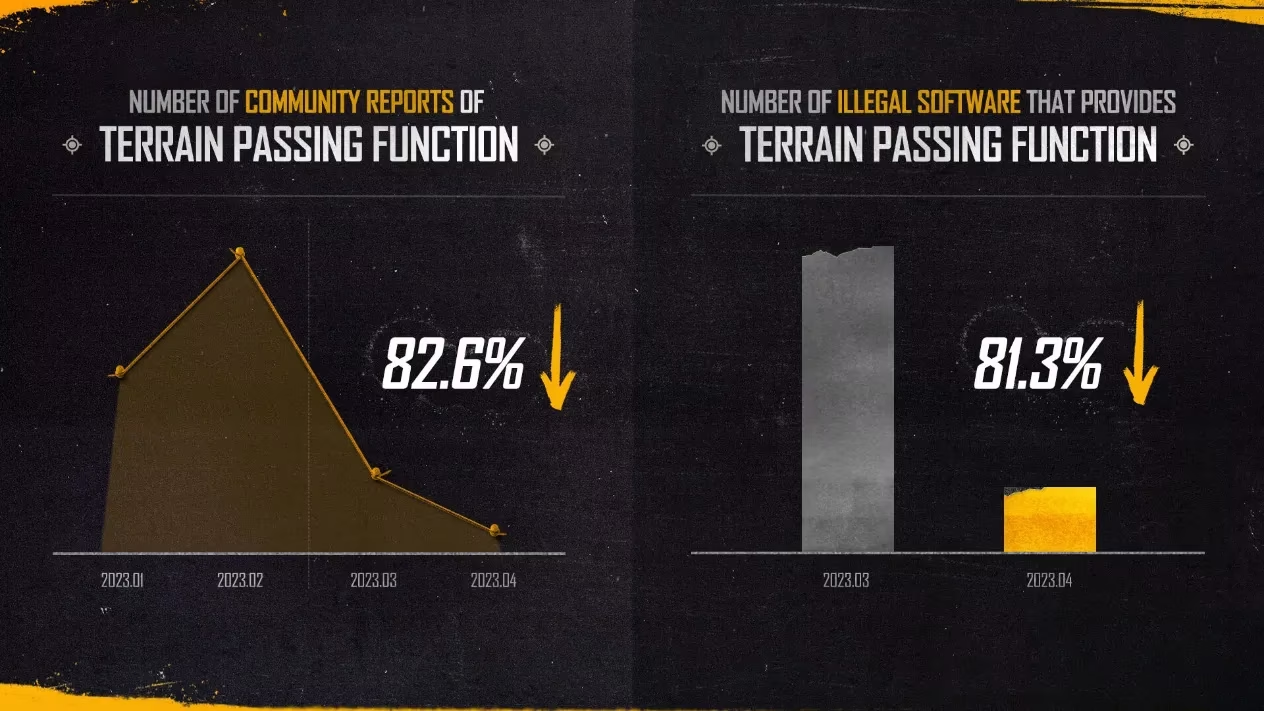
Those numbers are encouraging, but they are not a victory lap. Data tampering remains a shape-shifting contortionist, able to mimic legitimate collision data and blur the line between a cheat and a latency spike. The team has continued to refine verification logic, aiming to fortify defenses against this subtler method. By 2026, the anti-cheat strategy has evolved into a blend of machine learning, real-time match monitoring, and community reporting.
| Threat | Method | Countermeasure | Status |
|---|---|---|---|
| Terrain passing via code tampering | Modifies game code to ignore boundaries | Enhanced Zakynthos detection (March 2023) | Major reduction: 81% fewer illegal tools, 83% fewer reports |
| Terrain passing via data tampering | Manipulates collision data | Verification logic for vehicles and characters; ongoing refinement | Active development and hardening |
| Shooting from inside terrain | Exploits collision gaps | Defensive position correction; verification logic for shots fired from terrain | Implemented and monitored |
Key pillars of PUBG's anti-cheat response:
-
🛡️ Defensive repositioning: characters or vehicles found in abnormal positions are returned to valid locations.
-
🎯 Shot verification: logic checks cases where players fire from inside terrain toward targets outside.
-
⚙️ Zakynthos upgrades: tamper detection tuned to catch code modifications without harming performance.
-
🤖 Machine learning: models trained to identify suspicious patterns.
-
📡 Real-time monitoring: live matches watched for emerging exploits.
-
📝 Player reports: community submissions validate automated systems and guide investigations.
Community reports matter. From an individual player's perspective, a single report may feel insignificant, but those submissions collectively validate anti-cheat efforts. The PUBG team has said reports greatly contribute to confirming suspicious behavior, exposing new tampering methods, and supporting faster action against cheaters.
Entering 2026, the terrain-passing problem has not vanished, but the trend line is clear. The 2023 measures delivered measurable damage to illegal software, and subsequent work has focused on the stubborn data-tampering route. The team's stated commitment is to advance machine learning technology, strengthen anti-cheat measures, and monitor matches in real time. That combination treats anti-cheat not as a single patch but as an ongoing process.
Fair play is the foundation of battle royale. When cheaters walk through walls, they do not just ruin a match; they erode trust in every firefight. PUBG: BATTLEGROUNDS continues to urge players to report cheaters and to stay tuned for further updates. The war against terrain passing is far from over, but the direction is unmistakable: tighter detection, smarter verification, and a community that refuses to let cheaters phase through the rules.