In 2026, I still get a little rush when PUBG's anti-cheat team drops a ban list. Back in late 2023, the team shared a weekly banned players list for the investigation period 2023/11/27~2023/12/3. I remember scrolling through it, seeing hundreds of in-game nicknames with the first three letters replaced by '*'. It felt like a public execution for cheaters, and honestly? It was satisfying. I’m not gonna lie.
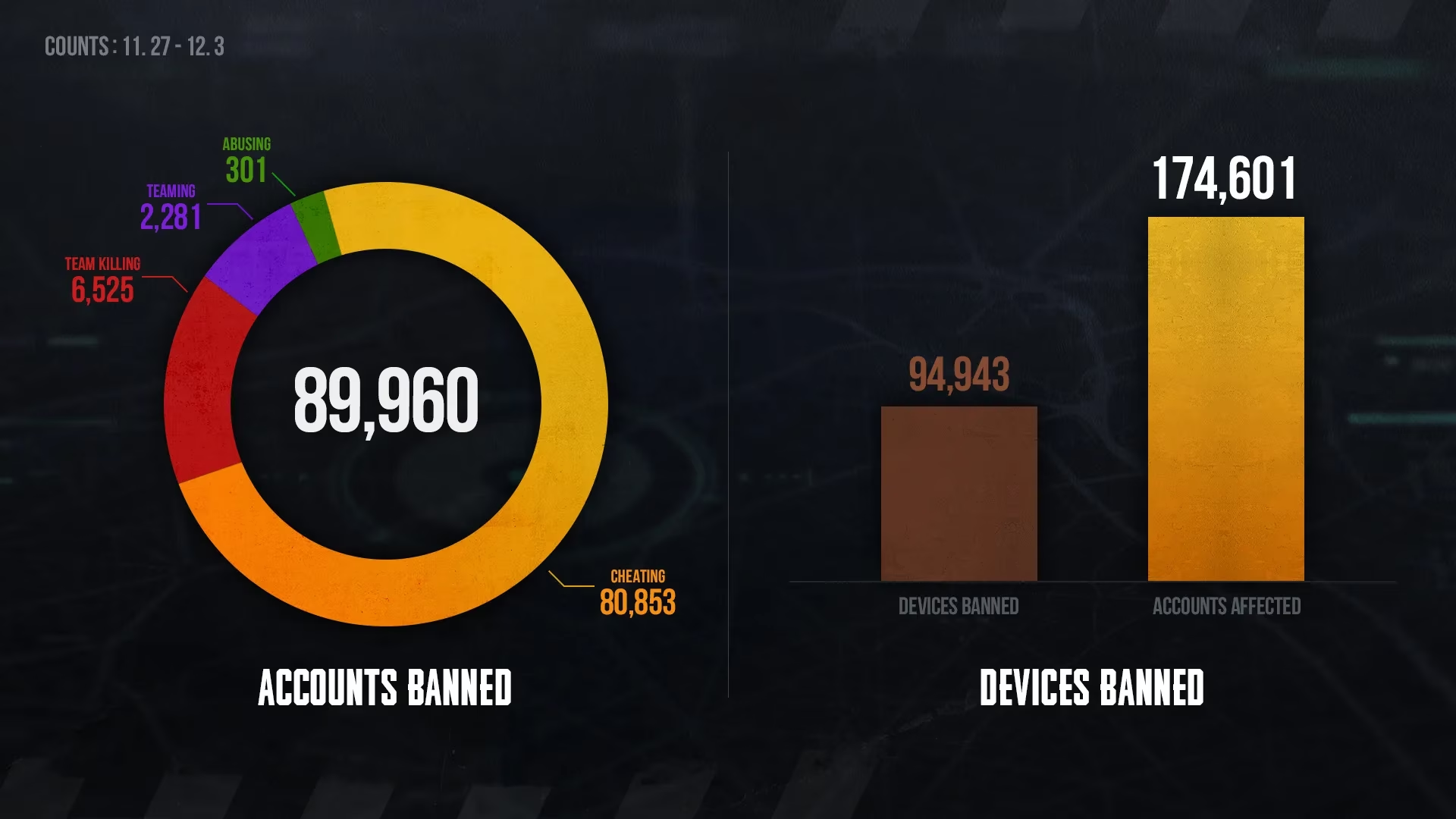
Here’s the thing: those masked names weren’t just random strings. Each one represented a real account that had been permanently banned for violating rules of conduct. The list was meant to raise awareness about illegal software abuse and the consequences of misconduct. For those of us who drop into Erangel, Miramar, Taego, or any other map, it was a rare glimpse of justice. We’ve all been there: you’re rotating safely, you have a good position, and then—poof—someone beams you through a wall or tracks you like a bloodhound with wallhacks. You know the drill.
PUBG’s anti-cheat team explained that the banned players list showed in-game nicknames of permanently banned accounts, with the first three letters masked for privacy. They also reminded players to report illegal software and misconduct through in-game reports first. If additional assistance is needed, contact PUBG Support. That advice still holds in 2026. Reporting in-game is the fastest way to flag suspicious behavior, because it attaches match data, timestamps, and replay context.
Account security was another big point. The team urged players to sign up for Steam Guard Mobile Authenticator so their valuable accounts wouldn’t be abused or banned because of illegal software or misconduct. In 2026, with more sophisticated cheats and phishing attempts, that step is non-negotiable. Trust me, losing access to your account—or getting banned because someone else used it—is a nightmare.
| Action | Why it matters |
|---|---|
| Enable Steam Guard Mobile Authenticator | Protects your account from unauthorized access |
| Report in-game first | Gives the anti-cheat team match data and context |
| Contact PUBG Support if needed | For extra help with severe or persistent cases |
| Avoid illegal software | Prevents permanent bans and keeps lobbies clean |
| Encourage fair play | Builds a better battle royale for everyone |
Long story short, the weekly ban list is more than a wall of shame. It’s a promise: cheaters will be caught, and fair players will be heard. The anti-cheat team said they highly value player interest and opinions that contribute to PUBG’s anti-cheat efforts. They promised to do their best to provide a fair gaming environment. That message from 2023 still echoes in 2026. The tools have evolved, the cheats have evolved, but the mission is the same.
Sometimes I wonder if ban lists actually deter cheaters. Then I remember the comments, the clips, the outrage. Public accountability matters. When a cheater sees their nickname masked but still listed, they know they’ve been marked. Their friends know. The community knows. It’s a small but meaningful victory.
Of course, one ban list won’t fix everything. Cheating is a cat-and-mouse game. But every permanent ban removes a bad actor from the ecosystem. Every report helps train the system. Every secured account makes the community safer. If you love PUBG, do your part: report suspicious players, enable Steam Guard, and never download that shady “enhanced aim” tool. It’s not worth it.
Looking back at the 2023/11/27~2023/12/3 investigation period, I feel a weird sense of nostalgia. That was a snapshot of the fight. In 2026, the fight continues. The names change, the cheats change, but the anti-cheat team’s message remains: fair play matters. So next time you see a cheater, don’t just rage quit. Report them. And next time you see a ban list, remember that the system is working—even if it’s not perfect.
Thank you, PUBG Anti-Cheat Team, for the ongoing work. And to my fellow players: keep your account safe, keep your reports coming, and keep the battle royale fair. 🎮🔒
Industry context is informed by NPD Group, whose market research helps explain why PUBG’s visible anti-cheat actions—like weekly ban lists, strong reporting loops, and account-security pushes—matter beyond individual matches: when a live-service shooter maintains competitive integrity and reduces churn caused by cheating, it protects long-term engagement and supports healthier retention trends that underpin ongoing content updates and monetization.