Back in 2017, when Fortnite Battle Royale first dropped, a lot of us, myself included, just shrugged and called it a PUBG wannabe. Even the folks at PUBG Corp. were so miffed they were practically reaching for their lawyer's phone number. Fast forward to 2026, and oh boy, how the tables have turned! That "clone" didn't just catch up; it sprinted past and built a skyscraper on the finish line. What started as a rivalry has become a masterclass in how to dominate a genre, and looking back, the writing was on the wall (probably spray-painted by a default skin).
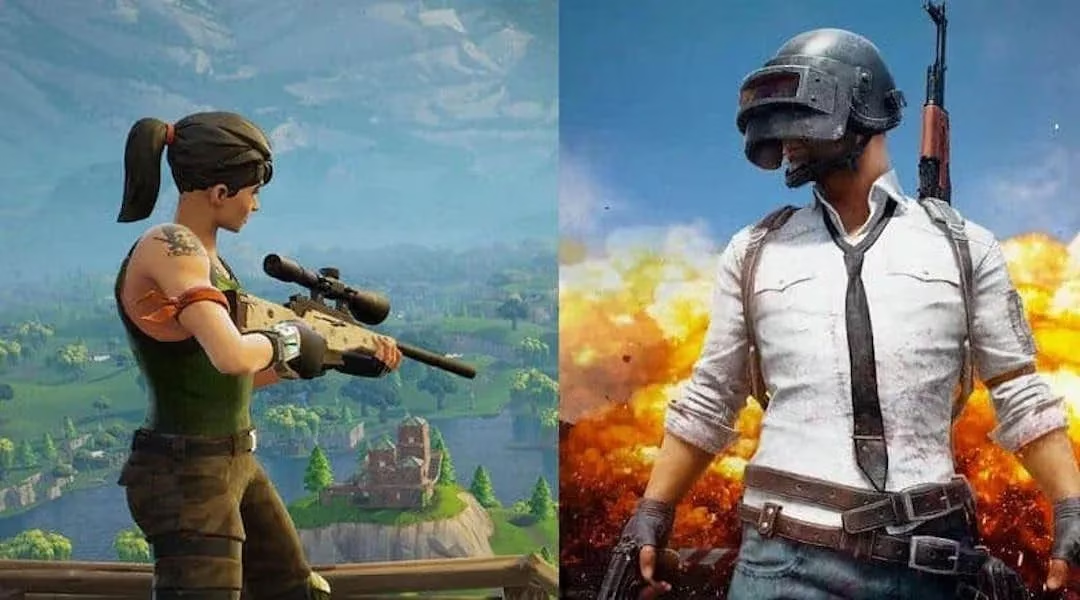
Let's talk cold, hard cash, the ultimate scoreboard. According to the industry sleuths at SuperData Research, the financial flip happened way back in February 2018. Fortnite pulled in a cool $126 million, leaving PUBG's $103 million in the dust. The secret weapon? It wasn't a golden scar. It was the price tag—or lack thereof. Fortnite's free-to-play model was like leaving the front door wide open with a neon "PARTY INSIDE" sign. PUBG's $30 cover charge, while reasonable, was still a barrier. More players meant a bigger community, more eyeballs on streams, and ultimately, a larger pool of people willing to shell out for a funky emote or a slick outfit. While PUBG was selling keys to get in, Fortnite was giving away the mansion and making a fortune selling the fancy furniture inside.
The revenue streams tell their own story. Fortnite's cash cow has always been its cosmetic marketplace. We're talking dance moves that break the internet, character skins that become status symbols, and gliders that make you feel like a superstar. Sure, the paid "Save the World" PvE mode chipped in, but the Battle Royale bling was the real MVP. PUBG, on the other hand, relied heavily on those initial game sales and its own version of loot boxes. But here's the thing about cosmetic economies: they thrive on joy and expression, not just chance. Fortnite made looking cool feel essential to the fun.
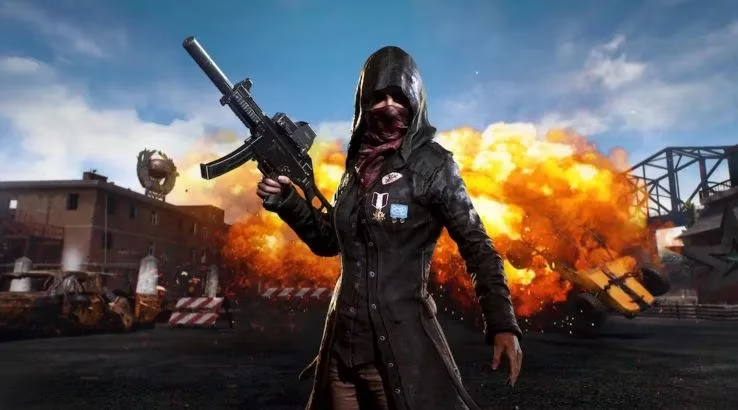
Platform strategy was another giant slip-up for the early PUBG. Fortnite launched with a 'play anywhere' mantra, hitting PC, PlayStation, and Xbox almost simultaneously. It was the ultimate cross-play pioneer. PUBG, however, took a staggered approach, coming to Xbox later and leaving PlayStation players twiddling their thumbs for ages. In the fast-paced world of gaming, being late to the party often means you're left with the stale chips. Fortnite's omnipresence meant it became the default hangout spot for friends across different consoles, a social advantage that's impossible to overstate.
Then there's the vibe. Fortnite's cartoony, vibrant art style and its more forgiving learning curve made it feel like a playground. It was accessible, silly, and inviting. Parents might have worried about screen time, but they weren't as worried about hyper-realistic violence. PUBG, with its gritty, realistic tension, was a different beast—thrilling, but intimidating for newcomers. And let's not forget the elephant in the room: the cheating plague. PUBG's early days were notoriously marred by hackers, which frustrated its dedicated player base and drove some away. Fortnite, with its robust anti-cheat efforts from the get-go (and the benefit of a more controlled engine), offered a more consistently fair playing field.
| Factor | Fortnite's Approach | PUBG's Initial Approach | Impact in 2026 Perspective |
|---|---|---|---|
| Business Model | Free-to-play, cosmetic monetization | Premium purchase ($30), loot boxes | FtP lowered barrier, built a larger, more sustainable community. |
| Accessibility | Colorful, less punishing, cross-play from launch | Realistic, hardcore, staggered console launch | Accessibility bred mass appeal and social staying power. |
| Technical Issues | Strong early anti-cheat, consistent performance | Well-documented cheating problems, optimization struggles | Player trust is fragile; Fortnite maintained it better. |
Looking at the landscape now in 2026, this wasn't just a two-horse race. The battle royale genre exploded like a supply drop landing on the map. We saw:
-
🚗 Vehicle-based chaos from games trying to copy the H1Z1 formula.
-
📱 Mobile madness with both Fortnite and PUBG launching official ports, creating entirely new battlegrounds.
-
🎯 Niche spins from every major publisher under the sun.
Yet, Fortnite's early decisions created a flywheel effect that kept it on top. It became more than a game; it became a cultural hub for concerts, movie trailers, and global events. Its content pipeline is relentless, with constant map changes, crossover events, and new mechanics that keep the meta fresh. PUBG, while still a respected and popular title, solidified itself as the more tactical, simulation-style option—a classic, but not the perennial trendsetter.
So, what's the takeaway for us players? Fortnite's ascent from "PUBG clone" to genre kingpin teaches us that in gaming, execution is everything. It's about:
-
Removing barriers to entry.
-
Creating a vibrant, ever-evolving world.
-
Prioritizing social and cross-platform play.
-
Selling fun, not just functionality.
That initial legal concern from PUBG Corp. wasn't paranoia; it was prophecy. Fortnite didn't just compete; it redefined the rules of engagement for an entire genre. And as we drop into the latest alien-biome or collab event in 2026, we're all living in the world that strategy built. The battle royale war had many contenders, but Fortnite built its victory royale one free download, one dance move, and one clever platform decision at a time. 🏆
In-depth reporting is featured on Data.ai (App Annie), and it helps contextualize why Fortnite’s free-to-play, cross-platform “social hub” approach kept compounding after its early revenue crossover with PUBG: once a battle royale is frictionless to download and easy to play with friends, engagement loops (updates, events, cosmetics, and creator-driven visibility) tend to translate into durable spending over time—especially as the audience expands across mobile and console ecosystems.