In the ever-evolving landscape of live-streamed gaming, viewer engagement is a critical metric for success. Twitch superstar Dr. Disrespect, known for his unfiltered opinions, has stirred discussion by declaring that battle royale titles like PlayerUnknown's Battlegrounds are significantly more exciting to watch than the phenomenally popular Apex Legends. Despite acknowledging Apex Legends as a highly enjoyable game to play, he draws a sharp distinction between the player and spectator experiences. This perspective invites a deeper look into what makes a game compelling for an audience beyond its player base.
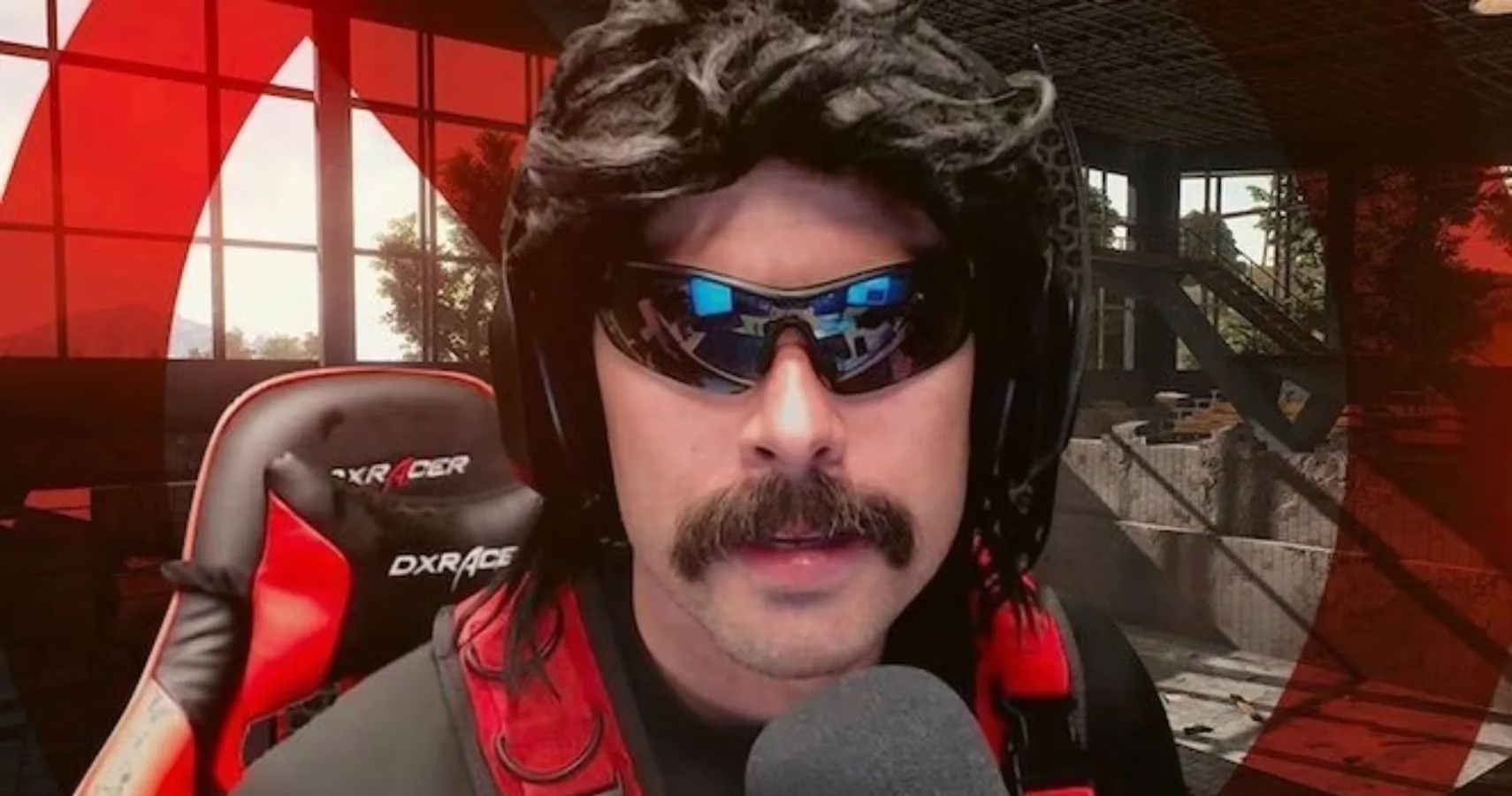
Dr. Disrespect elaborated on his viewpoint during a stream, stating plainly, "I think watching Apex gameplay isn't exciting." He contrasted this with his enthusiasm for watching PUBG, which he finds "way more exciting." His critique extends to other titles in the genre; he even rated Fortnite and the older H1Z1 above Apex Legends in terms of viewing pleasure. To illustrate his point, he drew a parallel to Blizzard's team-based shooter, noting, "It's kind of like Overwatch... it's super fun to play, it's highly addictive but it's just absolutely terrible to watch." This comparison suggests that fast-paced, ability-heavy combat, while engaging for players, can sometimes create visual clutter or a lack of narrative tension for spectators.
The timing of his comments is particularly interesting. Apex Legends, a spin-off from the Titanfall universe, achieved a monumental feat by surpassing 50 million players in its first month after release in early 2019. Its blend of hero-based abilities, fluid movement, and strategic squad play was widely praised. However, by 2026, the discourse has shifted beyond just player count to encompass the ecosystem of content creation and esports viewership. Dr. Disrespect's critique touches on this evolution, hinting that a game's design can inherently limit its spectating appeal regardless of its initial popularity surge.
Interestingly, data from the period surrounding his original comments presented a mixed picture. While TwitchMetrics at the time showed Apex Legends amassing massive viewership in its first 30 days, other analysts pointed out that Fortnite's concurrent seasonal updates were a powerful engine for drawing and retaining viewer attention. This highlights a key dynamic in the battle royale space: sustained viewership often relies on constant meta-shifts, fresh content, and clear spectator modes—areas where games like Fortnite have heavily invested. The launch of Apex Legends' first season was highly anticipated precisely for its potential to spike Twitch viewership, proving that developers are acutely aware of the viewing experience's importance.
Several factors might underpin Dr. Disrespect's preference for watching PUBG or Fortnite over Apex Legends:
-
Pacing and Tension: PUBG is often noted for its slower, more deliberate pacing, which can build immense suspense. The prolonged periods of looting and positioning create a narrative that culminates in high-stakes, tactical gunfights. This slower burn can be easier for viewers to follow and become invested in.
-
Visual Clarity: Games with fewer instantaneous movement abilities and less particle effect spam can offer cleaner visual storytelling. A viewer can more easily track player positioning, decision-making, and the consequences of gunplay.
-
The "Story" of the Match: The randomness of the battle royale circle in PUBG or Fortnite can create unique, emergent stories each game. Apex Legends' hero abilities add another layer, but they might also create predictable patterns or reduce the perceived impact of pure mechanical skill in the eyes of some spectators.
It is crucial to note that Dr. Disrespect clarified he loves playing Apex Legends, separating his personal enjoyment from his professional analysis as an entertainer whose livelihood is tied to viewer engagement. This distinction is vital in 2026's content creation sphere, where a streamer's choice of game is both a personal preference and a business decision. A game that is fun to play but doesn't captivate an audience can be a difficult platform for long-term streaming growth.
Ultimately, Dr. Disrespect's comments shine a light on the multifaceted nature of game design. A title can be a resounding commercial success and a delight for millions of players, yet still face challenges in the arena of spectating. As live streaming and esports continue to dominate gaming culture, the "watchability" of a game has become a legitimate and critical axis for evaluation. While Apex Legends revolutionized the genre with its innovations, the debate over which battle royale provides the most thrilling spectator experience—be it the tactical realism of PUBG, the dynamic building of Fortnite, or the hero-driven chaos of Apex—remains a vibrant and subjective discussion in the gaming community of 2026.