As the gaming world continues to be captivated by the last-player-standing frenzy, the very architect of its modern popularity, Brendan "PlayerUnknown" Greene, has quietly closed one chapter and turned the page to a new one. Far from the relentless spotlight of PUBG updates and esports tournaments, Greene has made a decisive pivot, stepping away from the battle royale genre he helped define. In 2026, while games like Fortnite and Apex Legends continue to dominate the free-to-play landscape, the pioneer himself is looking toward horizons unseen. Having declared the battle royale chapter of his career complete, Greene is now leading a special projects division from a new base in Amsterdam, tasked with a mission far more abstract and ambitious: to explore new ways of connecting people in digital spaces. What does the future of online interaction look like when freed from the constraints of a shrinking play zone and a battle for survival? This is the question now driving the visionary designer.
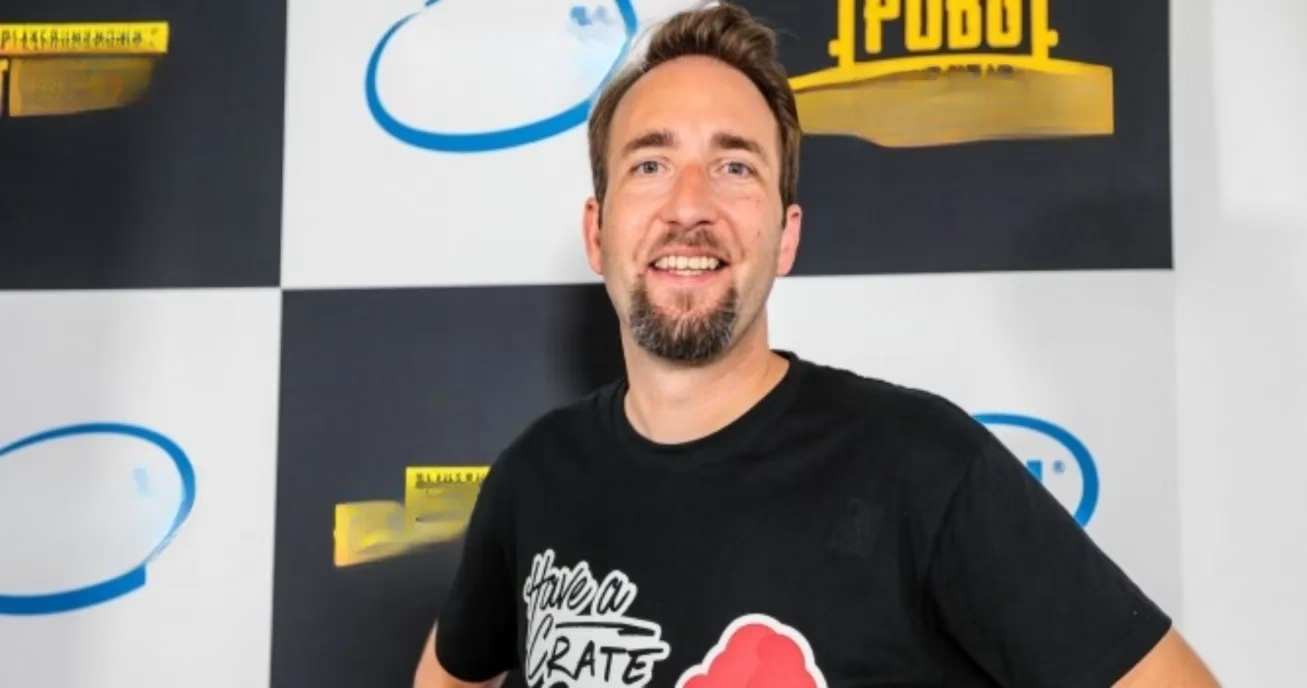
Greene's departure from the genre is not a quiet retirement but a deliberate shift in focus. In a move that surprised many, he transitioned from his central role at PUBG Corp.'s Seoul headquarters to establish and lead PUBG Special Projects from a new office in Amsterdam. This wasn't a demotion or a sidelining; it was a strategic grant of creative freedom. PUBG Corp. CEO Chang Han Kim essentially gave Greene a blank canvas and a new team, with a simple yet profound directive: to make the ideas in his head playable. Freed from the operational demands of maintaining a live-service behemoth, Greene's new division is dedicated purely to research and experimental game development. Could this be the birthplace of the next seismic shift in multiplayer gaming?
"The last man standing concept is great, but I've done that," Greene stated emphatically, drawing a line under his most famous work. "I don't really intend to make PUBG 2. I've done battle royale, it's time to try something else." He reflects on his contribution with a mix of accomplishment and readiness to move on, adding, "I think I've provided others with a good way of killing each other. But I want to explore some other things." This sentiment marks a clear end of an era. While the industry might clamor for a sequel from the original creator, Greene's mind is elsewhere, pondering experiences that don't necessarily end with a "Winner Winner Chicken Dinner."
So, what exactly is he exploring? The details, as Greene admits, are still forming. However, the guiding principle is clear and compelling: the exploration of novel online experiences and connection. In an age where digital interaction often defaults to competitive shooters or social hubs, Greene is asking fundamental questions. How can games connect people in ways that haven't been done before? What forms of collaboration, creation, or shared experience lie beyond the realms of combat and competition? His goal isn't to refine an existing genre but to potentially discover a new one—to create digital spaces that foster different kinds of social bonds and collective experiences.
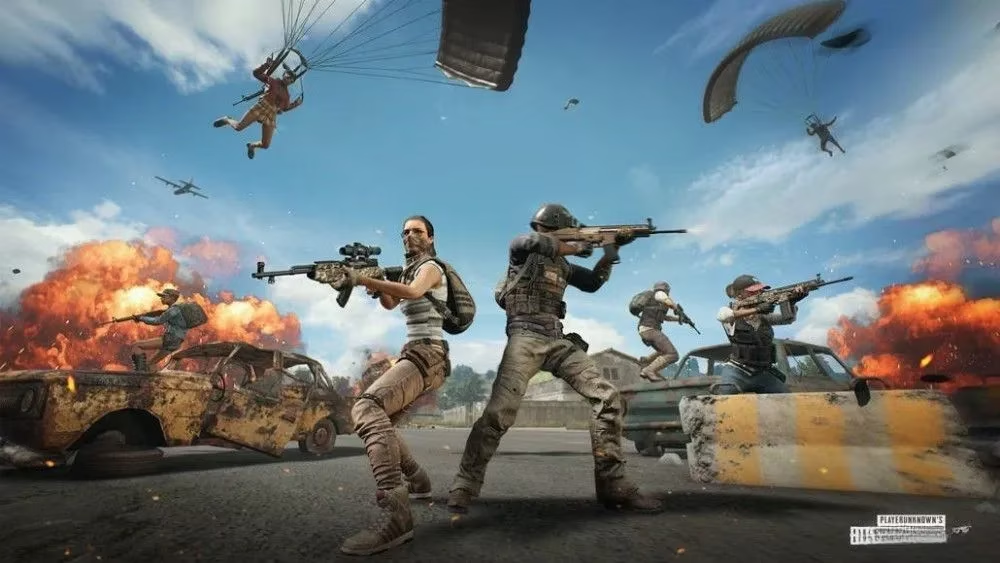
The legacy Greene leaves behind is monumental. Before PUBG, the battle royale genre was a niche modder's playground. He transformed it into a global phenomenon that reshaped the entire industry. The ripple effects are still felt today:
-
Mainstream Adoption: Major franchises like Call of Duty and Battlefield integrated battle royale modes.
-
Cultural Impact: The genre spawned a new era of streaming and esports.
-
Accessibility: Free-to-play models perfected by Fortnite and Apex brought the genre to hundreds of millions.
-
Unexpected Twists: Even puzzle games like Tetris 99 found a way to incorporate the last-player-standing thrill.
Yet, for Greene, this legacy is now a foundation to build from, not a ceiling to rest under. The move to Amsterdam symbolizes more than a change of scenery; it represents a psychological and creative reset. Surrounded by a new team in a new city, the pressure to iterate on past success is replaced by the freedom to prototype, fail, and innovate.
What might these "new online experiences" entail? While Greene keeps his cards close, we can speculate based on the trajectory of technology and social gaming in 2026:
| Potential Focus Area | Description |
|---|---|
| Persistent Social Worlds | Experiences less about match-based sessions and more about living in a shared, evolving digital space. |
| Emergent Narrative | Games where the story is created by player interaction and collaboration, not predefined missions. |
| Non-Violent Conflict & Goals | Challenges based on exploration, puzzle-solving, or large-scale cooperation without combat. |
| New Input & Immersion | Leveraging advancements in VR, AR, and haptics to create more intuitive and embodied connections. |
Is the gaming world ready for a major innovation from PlayerUnknown that doesn't involve a blue zone? Greene's journey suggests that the most interesting frontiers aren't found in refining the art of the last stand, but in imagining the first steps into entirely new kinds of shared digital realities. His work at PUBG Special Projects may not result in the next record-breaking hit overnight, but it has the potential to plant the seeds for the next decade of online play. As he looks beyond the battle royale, the industry watches, waiting to see what new way to connect he will discover next.